

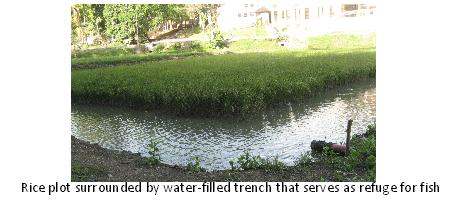
At the Goducate Training Center in Iloilo, Philippines, our agriculture team is modelling a rice-fish farming system in support of Goducate’s “GoFeed” mandate. The results, so far, are promising. The agronomic performance of the rice plants are impressive and the fish are progressively increasing in size and weight.
Popularly known as rice-fish culture, this technique is significant for its symbiotic relationship feature. The fish eat insect pests, fertilize the plants with their droppings, and aid in oxygen circulation. In turn, the rice plants provide shade to the fish, protect the fish from predators, and supply supplemental feeds through decaying leaves.
Two rice plots, approximately 600 sq m each, were prepared by digging perimeter trenches measuring two meters wide and one meter deep. The trenches serve as refuge for the fish during intermittent draining of the ricefield. After planting, each plot was separately stocked with 1,000 fingerlings of Nile tilapia (Tilapia nilotica) and African catfish (Clarias gariepinus). Starter feeds were given for the first month. After that floater feeds were supplied.
Our visitors have seen the practical and replicable aspects of the rice-fish model. The major requirement to succeed in this technology, however, is reliable water supply. A distinct advantage at GTC is the presence of a water impounding project which ensures the technical feasibility of integrating fish with rice throughout the year.
There is empiricial evidence that rice-fish culture can increase rice yield up to 10%. Aside from supplying the staple and protein needs of the household, it also has the potential to produce a net farm income that is about five times more than what a farmer usually realizes from rice monoculture.


