

Three members of staff from the Goducate Training Center in Iloilo, Philippines, were recently in North Sumatra for an exposure trip. Jan, Jet, and Mike were there to learn from Goducate Indonesia, which has partnered with some organizations involved in poverty alleviation. This year, Goducate Indonesia has been in the forefront of helping transform the lives of disadvantaged Indonesians from a state of helplessness into a purposeful one.
In one village, the three observed that most of the people draw income from backyard animal raising, from crop sales, and from being hired workers. The household per capita income is below $800 per year, and the impoverishment is evident from their semi-permanent shelters with palm-frond roofing. The literacy level is low with no-one from among the 120 families in the community having a college degree.
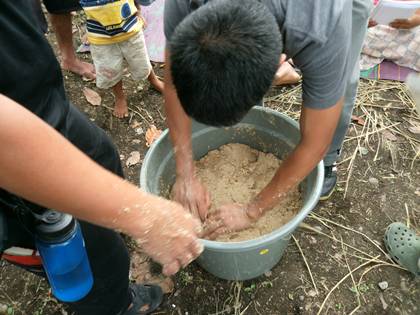
Three months ago, Goducate Indonesia and its local partner conducted a consultation with the people, and the consensus was for a livestock project in the village. At the time the three men from the Goducate Training Center were there, the animal shed was being constructed, so, under my supervision (since I been through farm mechanics, carpentry, and farm structures classes in my days as an agricultural student), they were able to help install the electrical connections, the plumbing, and the electric water pump, thus saving the locals from having to seek expert help from elsewhere. They then showed the locals how to ferment feeds using indigenous materials mixed with proportionate amounts of water and molasses.
One other highlight of their visit was the trip to Nias Island. This is the largest island in a chain that parallels the west coast of North Sumatra. It has a population of about 800,000 people, most of whom are of Malay ancestry. In 2005, the coastal areas were devastated by a tsunami and more than 2,000 casualties were reported. The island used to be famous worldwide as surfing destination but the recent spates of earthquakes have considerably slowed down tourism.
In Nias, the Goducate Training Center staff helped me with my lectures on emerging agriculture technologies and in doing the field surveys. They noted that the islanders are very reliant on income from coconuts and native fruit trees as well as from sea resources. The techniques of food production used there, whether it be from poultry, livestock, vegetables, freshwater fish, grains, or cereals, is low tech, and the emphasis is in meeting the staple needs rather than for commercial scale.


The feedback from the three Goducate Training Center staff is vital for the enrichment of the existing curriculum at the training center. For instance, they found it worthwhile to include acquisition of basic skills in carpentry, plumbing, electricity, and rapid rural appraisal. These shared ideas will impact a lot on improving instruction so that the students will end up as holistically trained community development workers with the right mind-set of helping needy Asians help themselves.