

In the North Sumatran highlands, coffee is the main source of income for many households. Productivity is marginally low, however, so the majority of the farmers are unable to earn enough to improve their family’s welfare. The presence of unscrupulous traders worsens the situation, resulting in high indebtedness among the villagers and pushing them to be mired in a state of helplessness.


A year ago, when Goducate Indonesia sent a team to do an agriculture survey, it found out that the coffee production practices were largely traditional in North Sumatra. Nursery activities and plantation management were below industry standards. Processing of coffee beans followed the dry rather than wet method. Without fermentation, which happens only with the wet scheme, proteolytic enzymes and good amino-acids remain unlocked within the beans, so the outcome is brewed coffee with inferior aroma and taste. The traders attributed these negatives to the coffee cultivar. Our team, however, pointed out to the farmers that they were, in fact, cultivating the best coffee in the world – Coffea arabica. This was observed to be the dominant variety in Tapanuli Region. Mandheling, its popular trade name, was derived from the name of the Mandailing Batak Tribe.
When the Dutch colonists established coffee plantations in the late eighteen hundreds, the cultivar they planted was C Arabica. They told the natives not to pick the cherries since drinking coffee was unhealthy. The oppression of villagers by corrupt and greedy officials is exposed in the book called “Max Havelaar and the Coffee Auctions of the Dutch Trading Company”.
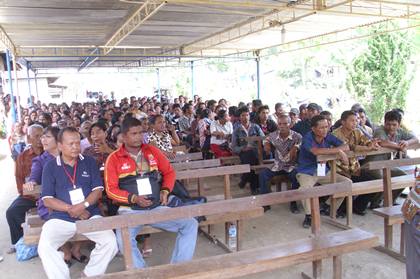
In order to help the needy coffee growers help themselves, Goducate Indonesia initiated trainings on coffee technology in the villages of Sipultak and Sidikalang some months ago. 90% of the participants reported that it was the first time they were attending a lecture on coffee. The topics focused on plantation establishment basics (layout, staking, hole digging, refilling, basal application of organic fertilizer, planting, mulching, bending or stumping, sprout selection, training of verticals, desuckering, weeding, pruning, foliar fertilization, and pest control), methods of propagation, harvesting and processing, and rejuvenation or cutting of vertical stems of old trees to induce growth of new sprouts.
The trainings involved both lectures and demonstrations. When we demonstrated the wet method of coffee processing to the farmers in Sipultak, and they realized after smelling the milled beans and tasting the brewed coffee how good their coffee was, they were so excited that we were unable to proceed with other topics that day.They were so challenged that they decided immediately to organize themselves into an association, which would help them in their negotiations with traders.
We hope that our initiatives will help the farmers to increase their coffee production and their productivity, to use their resources better, and to lead to more egalitarian income distribution among the coffee stakeholders.
