Sabah walkway collapses

Recently I led a team of visitors to Sabah to visit our literacy centers for children who cannot attend school because are ‘illegal aliens’ (aka refugees from Philippines).

In the team were 4 South Africans who are interested to start similar learning centers in South Africa.

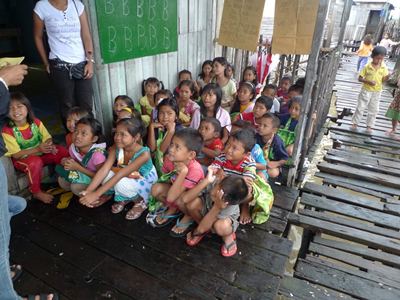
One of the centers that we visited was situated in a village built over the sea. This center had just started a week earlier. When we visited the center, the enthusiastic teacher was teaching her class of about 30 children the alphabet in the open area just outside her mum’s little wooden shack.

The visitors were standing on the walkway by the side of the makeshift ‘classroom’ observing the class of eager students, when all of a sudden the entire walkway of sticks gave way and dumped all the four South Africans plus a little village girl into the sea!

Class and walkway - before collapse
Walkway after collapse

Fortunately I was able to grab a pole that was still standing and hung on for dear life! Thankfully all the 5 who fell into the sea were spared any major injury – and made their way back to safety.

The cause of the collapse was probably due to the fact that the walkway of sticks was designed for lighter locals rather than heavier South Africans, plus the fact that continuous rains had softened the sticks.

The South Africans contributed 50 Ringgit (about US $12) to repair the walkway so that kids could safely get back to school and continue to learn their alphabets!

In spite of the dunking into the dirty water, we continued our visit and managed to visit 6 (out of the total of 14) Goducate learning centers in Sabah.

Hopefully, they will be able to start similar learning centers in the near future  in South Africa – and the dunking and drinking of dirty swamp water would not be in vain!

Visitors continue to visit literacy centers after dunking!

Lifepegs members have thirst-quenching experience on visit to Coca-Cola

“It tastes good!”

At least that’s the opinion of the 70 or so students who came along on the Lifepegs trip to the Coca-Cola factory in Changchun to learn how this sweet beverage—known and loved around the world—is made and distributed.

Listening to Coca Cola representative
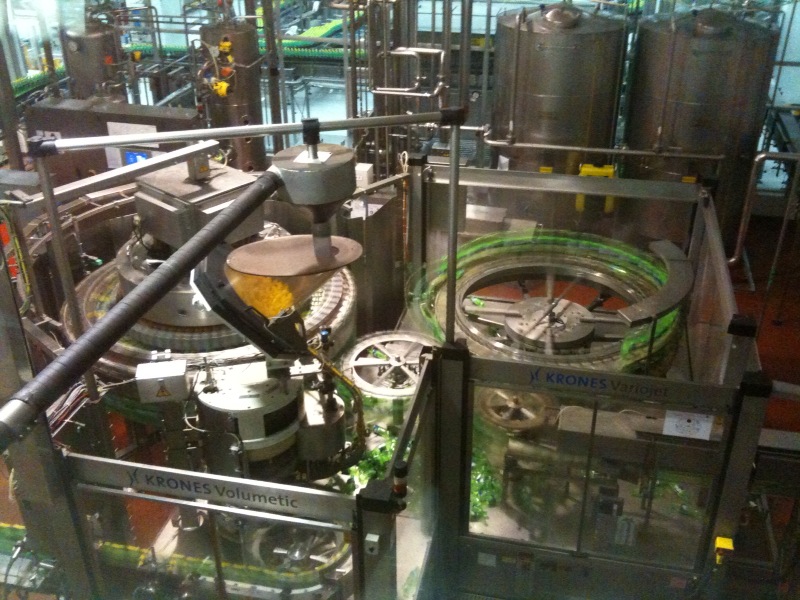
The inside of a huge watch?

On arrival the students immediately started snapping pictures of the outside of the factory and then of the factory lobby. The Coca-Cola representative taught us about the history of the company and answered a few questions, and then we walked up the stairs onto the observatory platform to see the machines at work. It was simply amazing! The sophisticated and speedy machinery, with huge wheels spinning in perfect synchronization, looked like the inside of a huge watch. Except instead of ticking away the seconds it was filling and capping hundreds of bottles—around 720 per minute! And in no time at all these bottles of beverage were going to be shipped around China and enjoyed by working citizens and weary travellers eager to satisfy their thirst.

It was a very cool experience. The factory tour definitely provided a great opportunity for the students to learn in a non-academic and fascinating environment something about how a multinational corporation works. And throughout the trip they were able to build relationships with fellow Lifepegs members, so many of whom are weary travelers along life’s road, still searching for the “real” solution to satisfy their thirst in life!

Lifepegs is privileged to be part of their learning process in a fun and innovative way.

Guest writer Matt, Volunteer in China

Goducate Training Center prepares for opening

The Goducate Training Center in Iloilo, Philippines, is almost ready to take in its first batch of trainees.

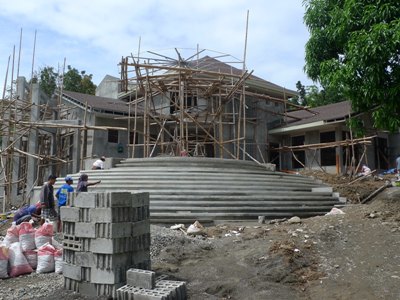
Work is going on at a frantic rate to complete the main structure of GTC—namely, the MultiPurpose Hall in time for our “soft opening” on April 9. This large modern facility will be where our trainees will attend classes, eat their meals, and sleep (on the floor).

Entrance to MultiPurpose Hall
Interior of MultiPurpose Hall

We are hoping to have a pilot intake of 25 trainees. They will be men who desire to serve the poor living in inaccessible and inhospitable communities in Asia. These trainees will be trained for approximately 8 months to learn the necessary skills to help the communities in which they will eventually work in. Since many poor Asians live in rural communities, a large part of their training will be in basic agricultural skills.

We hope to take in batches of several hundred trainees, men and women, in subsequent years.

Goducate believes in dreaming BIG, starting small, and building deep.