Goducate screens for hypertension in Sabah

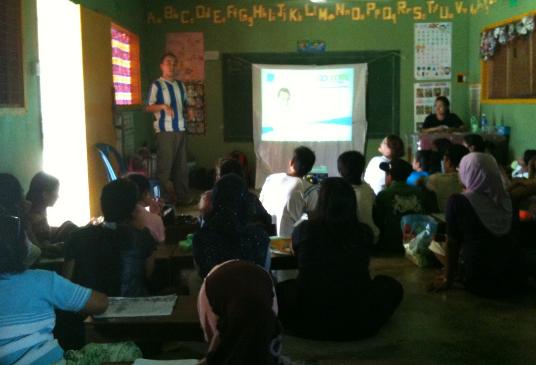
Most of the community served by Goducate literacy centers do not have access to state health services. Hypertension is common there because of the high salt diet. However, people there with hypertension are unaware of their condition and do not seek treatment until complications, such as a stroke, occurs.

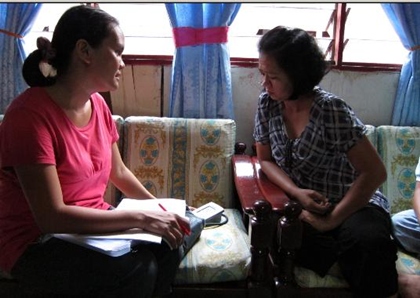
Explaining about hypertension to parent

Goducate has decided to take a preventive approach with our anti-hypertension program. Armed with a simple consumer-grade digital blood-pressure machine, our health educator visits villages where Goducate has a literacy center to check the blood pressure of the students’ parents and to explain to them what hypertension is, how it comes about, and how to look out for its complications, such as heart problems, stroke, and kidney failure.

Those found to have high readings even after repeated measurements are advised to help themselves by doing the following:

– Lose weight if they are obese
– Make dietary changes such as cutting down on oil and salt
– Reduce or to quit smoking
– Exercise more, for example, by doing more gardening
– Seek medical treatment (for those with the more severely high readings)

The health educator will return to the village every 6 months to monitor the parents’ blood pressure.
Deworming takes effect in Goducate centers in Sabah

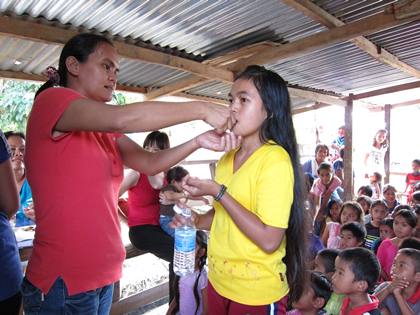
Since the start of our deworming session in April this year, our local health educator has visited 18 of our 24 literacy centers. She educates both the students and their parents about worm infestation and how to prevent it by paying attention to good hygiene.

Our health educator also measured the students’ heights and weights before giving them a dose of anthelmintic (deworming) medicine. These height and weight measurements will be used to give us an idea of the efficacy of the deworming program.

Health education class
Students learn how to wash hands
Measuring height
Giving deworming medicine

From the first round of measurements, about 20% of the students fall within the underweight growth curve, whilst 5% fall within the severely underweight curve. Feedback from the teachers, parents, and students from centers that have had the deworming sessions is that at least 70% of the students excreted parasites and are much more alert and energetic now.

Our health educator will be revisiting each center in 6 months’ time to re-measure heights and weights.

Goducate teachers in Sabah attend health seminar

A short while after the health talk for parents and the de-worming session for the children at one of Goducate’s learning centers in Sabah, the teachers from all the Goducate learning centers in Sabah were brought together for what we hope will be the first of a series of health seminars for them. They see the children almost every day, and they are looked up to by the students as well as by the rest of the community, so they are in a good position to influence the community’s health—by teaching, as well as by administering simple treatments. But first they need to acquire knowledge about health.

Poor sanitation in the community
Teachers at the health seminar

Since parasitic worm infestations are common in the kind of areas this community lives in, and it is a topic that had been taught to one group of parents, I started the session with this topic.sa Like many of the parents who attended the earlier session, the teachers had obviously had these infestations themselves because many could recount their own experiences. Many also pointed out that they cannot change the (non-existent) sanitation system they have now. However, good personal hygiene practice can definitely help towards prevention of parasitic infestation. Hence the teachers were taught the 7 steps of proper handwashing. They were also each given a copy of a handwashing poster so that they could return to their respective villages and teach their students.

The session ended with two common first-aid skills—how to stop bleeding from cuts, and treatment of burns from scalds and flames.