Goducate gets leader for its Indonesian expansion

Mr T Sihombing will join Goducate to lead its Indonesia expansion.

Goducate has always wanted to expand its work in Indonesia. Indonesia, an archipelago of 17,000 islands that stretches from the Indian Ocean on the west to the northern shores of Australia on its east, is the fourth most populous country in the world. After decades of underachieving development it has in the past few years grown at such an impressive rate that it is now considered one of the world’s “emerging economies.”

Goducate started its Indonesia work in the little island of Batam, an hour’s ferry ride south of Singapore, by offering English and computer classes to poorer children and workers. However, Goducate failed to expand its work due to the lack of indigenous leadership. Even the little island of Batam has a complicated cultural situation of many different tribes from all over Indonesia. The failure to understand this resulted in several poor administrative decisions.

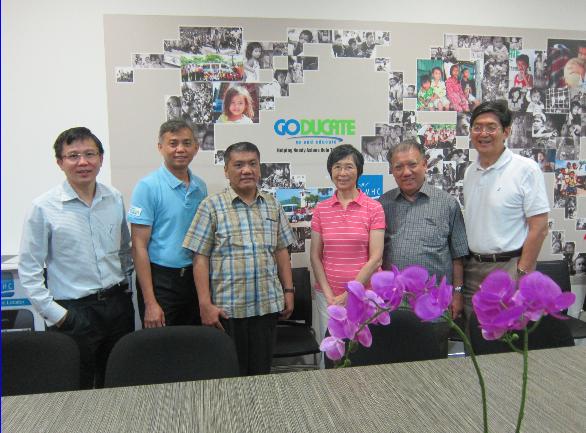
Mr T Sihombing, an Indonesian who has been trained in UK and Malaysia and who has worked in a charity organization for the past 5 years, will join Goducate shortly to lead its expansion in Indonesia. His work in the charity organization involved recruiting workers from all over Indonesia.

Goducate aims to help thousands of needy Indonesians help themselves.

Mr T Sihombing (3rd from left) at Goducate Headquarters

Goducate’s expansion plans for Indonesia

For the past 3 months I’ve been in and out of Indonesia visiting educational institutions in different parts of Indonesia (Java, Sumatra ,and Batam).

Indonesia is one of the emerging economies of the world and there is a new sense of excitement and hope among Indonesians across the different social strata. I am especially impressed with the way that the Indonesians are focusing on education, rather than on merely exploiting their vast natural resources.

Indonesia is a vast nation with 17,000 islands and countless ethnic groups. Though I speak conversational Bahasa Indonesia and am able to converse with most Indonesians. I’ve come to the conclusion that it is very difficult for me, a foreigner, to really understand this amazing but bewildering nation.

I believe that there are many needy Indonesians who will benefit from Goducate’s “Go and Educate” and its “help them to help themselves” philosophy. Though Goducate has been in Indonesia for three to four years (testing out various educational-aid models), I believe that unless we have an Indonesian who understands his/her people and their current educational needs, we will never really be able to make a significant difference in this 4th most populous country in the world.

Goducate is in the process of finding such a key person who will help us to expand its operations in Indonesia. We look forward to the day when even children in the remotest Indonesian island will have the opportunity to reach his/her potential.

Who will give him a chance?
With Sumatran school kids who receive financial assistance from an educational foundation

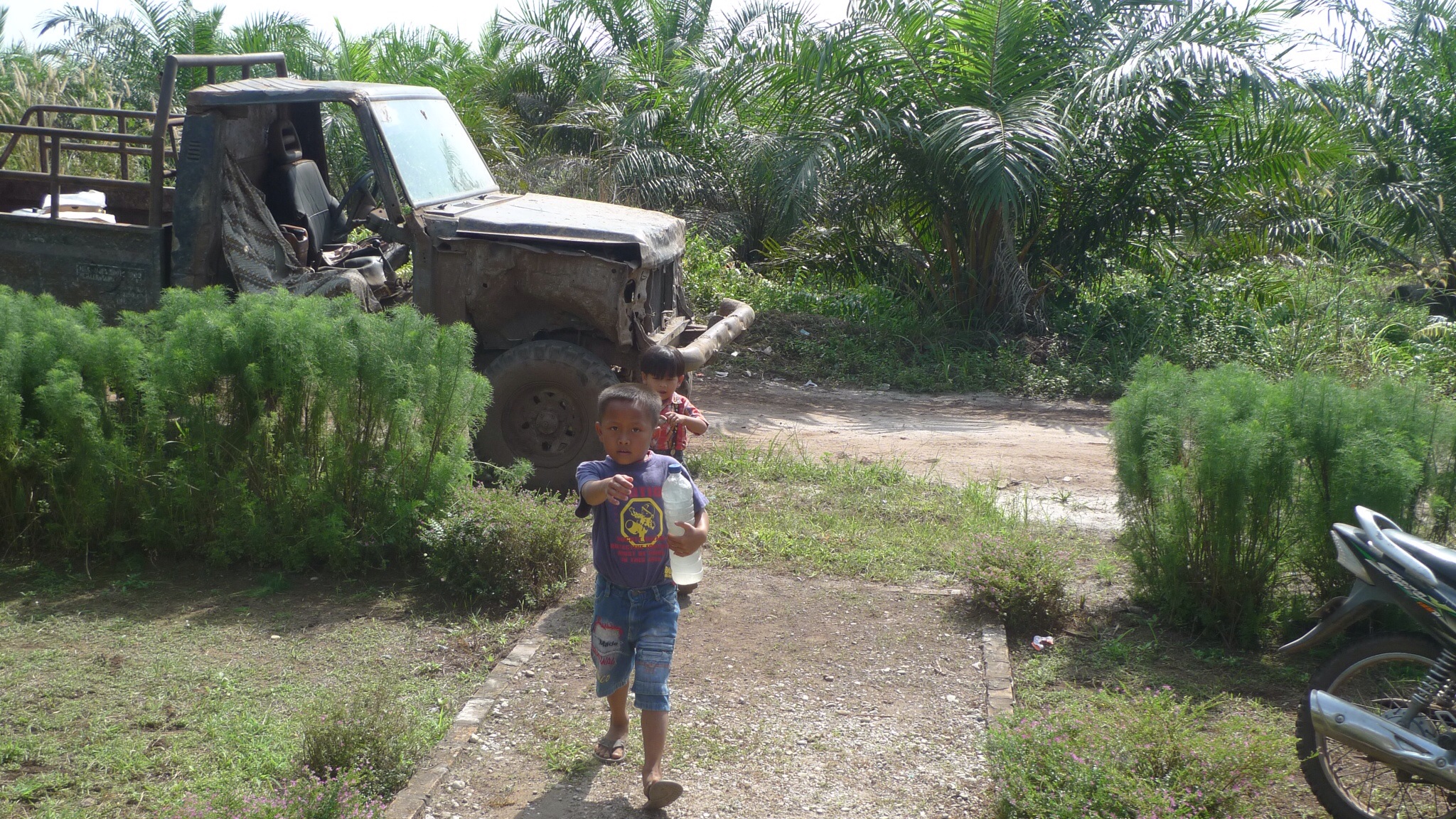
Kids in Sumatran plantations need schooling

Last week I visited a friend’s palm oil plantation 2 hours from the city of Pekanbaru, Sumatra, Indonesia.

My friend is an Indonesian who has started about 10 schools in different parts of Indonesia. Each of the schools she has started is a proper school offering standard education to poor Indonesian children. However, she is concerned about the many millions of Indonesian children who live in farms and plantations and who are unable to attend school because the nearest school is just too far away. The population density in these rural settings is too low to justify the establishment of proper schools.

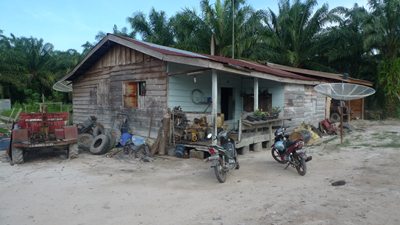
She is familiar with Goducate literacy centers and wanted me to see first-hand the situation in rural Indonesia. I took a 2-hour car ride on a winding, pot-holed road from the modern city of Pekanbaru. Then I had to transfer to a motorbike for the 2 kilometer ride to the plantation. It was definitely more exciting than a roller-coaster ride in Disney World! I reached the plantation “headquarters” after sunset. Most of the kids were at the “headquarters” because of the TV set there. At 11pm, the generator set was switched off, and then I went to bed.

The next morning I surveyed the community of about 20 workers and their families who were housed in simple barracks. There were about 20 school-aged children in the community. The nearest school was an hour’s walk away. It was a private school, whose fees many could not afford.

This challenging situation is common to many parts of Asia. How can Goducate help these poor people to educate their kids? I don’t know, but I know that we cannot ignore this problem.

Plantation "Headquarters"
Plantation vehicle and barracks
How do we help them?