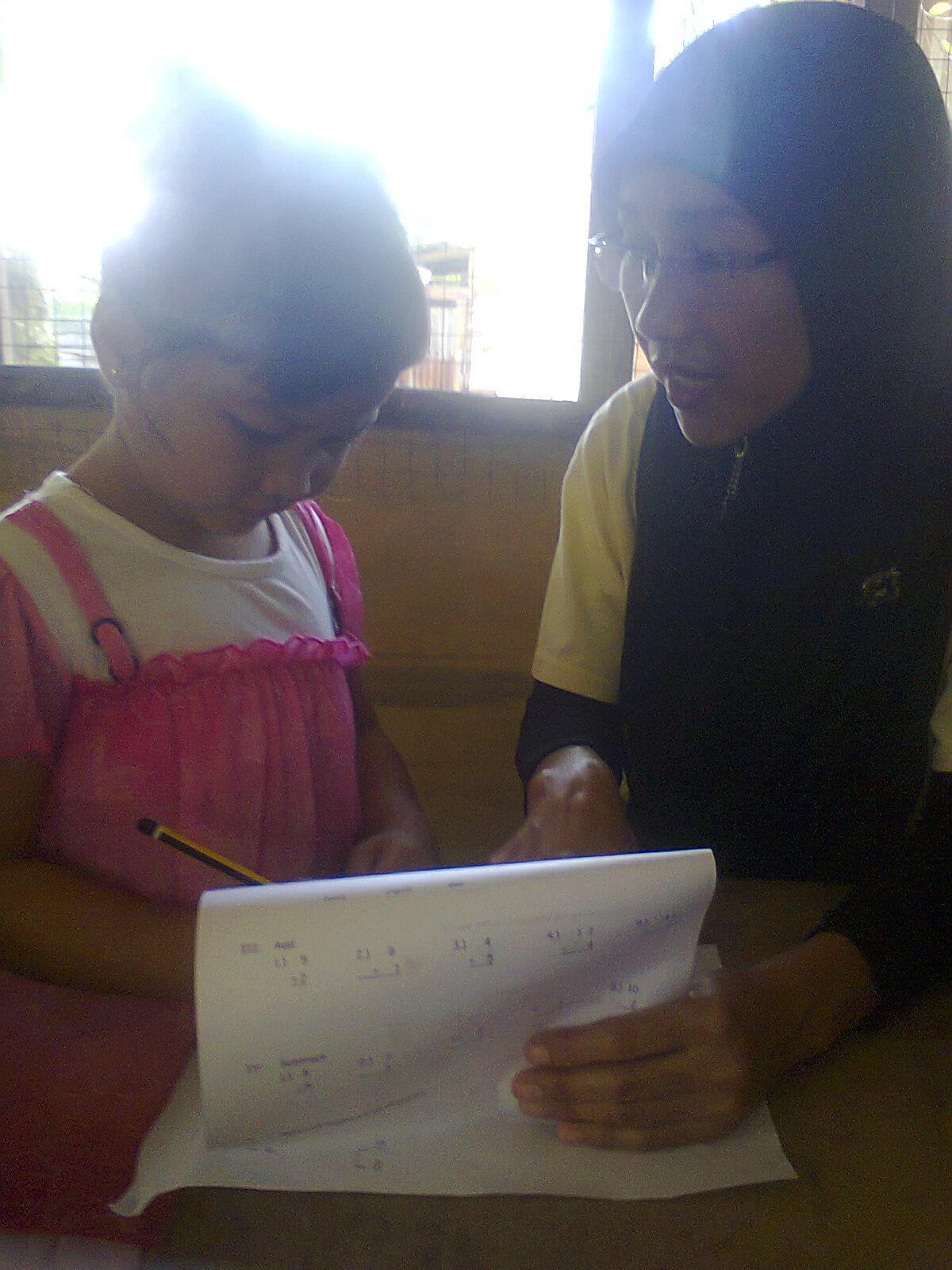
Evaluation is vital part of every learning program, and that is just what the more than a thousand children at Goducate’s literacy and numeracy centers in Sabah are undergoing right now. They are being assessed on what they have learnt through the year in their English, mathematics, and science classes. The evaluation also helps us assess the relevance of the curriculum and the effectiveness of the teaching.
The results of the year-end examinations contribute to only 50% of the evaluation. The other 50% is based on the teachers’ assessment of the student’s performance through the year.
Many children have to repeat their grades because their living conditions make it difficult for them to attend class regularly. What matters, though, is that the children are able to master the program.
One of the booming industries in Sabah is the food industry. Restaurants serving various Asian foods and even western fast-food restaurants are being opened, so there is an unending demand for good and trusted cooks and other kitchen staff, waiters and waitresses, and cashiers. Goducate hopes to train our current and ex-students to meet this demand.
First we need a good trainer. Our search for one ended in July, when our previous part-time literacy teacher, Teacher H, who has also been a cook for many years in an Indian restaurant, came to ask me whether he could join us again. He stopped teaching over a year ago, when his wife took over his teaching duties. Although he is enjoying his work as a cook, he says that nothing can compare with the joy of helping others through teaching literacy at our centers. After our discussion he agreed to come back, not as a literacy teacher, but as a cookery trainer in our livelihood program.
Teacher demonstrates, students take notes
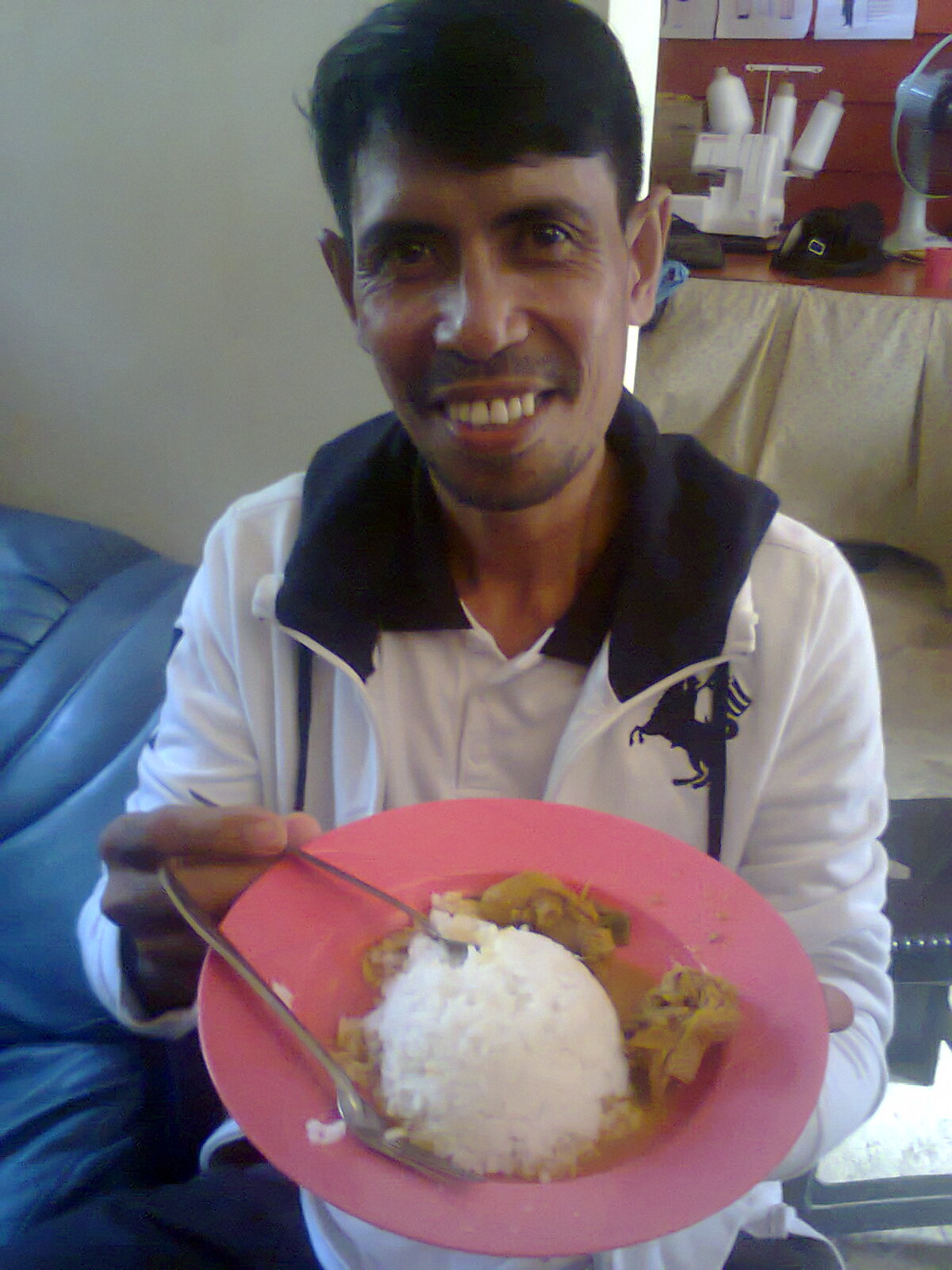
Last month, Teacher H started his cookery class with 11 students at the Goducate livelihood-training section situated in Goducate’s main literacy center. His students consisted of some intermediate-grade pupils at our literacy centers, some of our young assistant teachers, and others from neighboring communities. An important feature about the cookery training is that trainees will learn not only culinary skills but also good workplace attitudes.
Teacher H prepares to taste food
Having been a Goducate teacher in the past, Teacher H understands Goducate style of combining character training with skills training. He has also been successful in training two others to be cooks—his own children. Although Teacher H is considered by his boss to be vital to the restaurant, his two children, who are now also working at the same restaurant, are able to hold the fort when he is not around. They are also earning enough to financially support the family.
Having trained his own children to be cooks, he wants to do likewise for others who are willing to learn, so that they will be able to help themselves. As he told his trainees, if they perform well during the training, he can recommend them to his restaurant boss or to other restaurant owners.
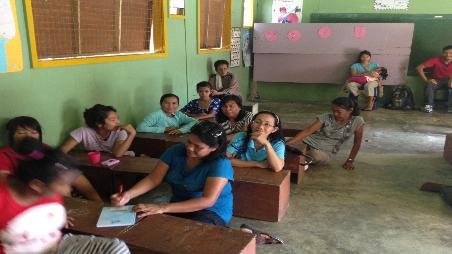
I and a colleague from the Facilitators Network of Singapore (FNS) visited a sample of the Goducate Learning Centers in Sabah to assess the teaching practices there in order to see how we might be able to help them. We observed classes ranging from level 1 to level 4.
The community being helped by Goducate here are Filipinos from the southern Philippines who came over to escape the civil strife, unemployment, and poverty they were facing in their home country. As undocumented aliens (stateless people), their children are not entitled to state education. Goducate has been training the more educated of the mothers there how to teach the children literacy and numeracy and primary school lessons.
To our pleasant surprise we observed that a Philippines curriculum was well established and standardised across the centers. The dedication and enthusiasm of the mothers who were doubling up as teachers was striking. Instead of dampening their spirits, the poor environment they live and teach in, often swampy or flooded, together with their limited resources, strengthened their resolve to do their “best” for their students. The teachers not only displayed a high level of involvement but also a measure of accountability and a high degree of motivation, as demonstrated by their passion to constantly upgrade themselves in order to benefit their students.
A few students who have “graduated” from the learning centers have become main or assistant teachers. This engenders a sense of community within the centers. Some other students still studying at the centers at a higher class level are helping as assistant teachers in the lower classes. This gives them a sense of responsibility and experience, and also teaches them about giving back to society. Having assistant teachers allows all students to get sufficient attention, especially in class sizes of greater than 10-15 students.
However, there was minimum interaction between the teachers and students, with teachers feeding information to students but very little discussion about the topic being taught. There was not much encouragement for students who answered correctly or finished a task on time, nor was there group sharing.
We had informal conversations and interviews with the teachers and assistant teachers. We also conducted focus groups. We asked questions pertaining to the highlights and lowlights of teaching, and how to become a good teacher. The teachers were very forthcoming and cooperative. The various answers that we received, consistent among which was a need for training to become a better teacher, will help us at FNS to prepare a program that will enable them to become facilitative and interactive teachers.