Goducate soapmaking livelihood program in Laguna gets big break

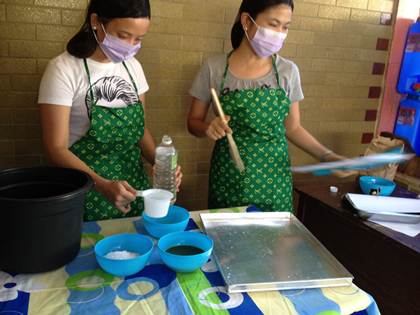
Soapmaking was introduced into the Goducate livelihood program in Laguna, the Philippines, as a means for the women to earn some extra income for the family. Initially they made plain soaps and liquid detergent for personal use or for sale locally. More recently they were taught to make herbal soaps. And then they had a big break with an order for 400 pieces of herbal soap, from a couple getting married in Singapore and wanting to use the soaps as door gifts. The couple chose two kinds of soap—moringa and guava.

Moringa soap is made with extract from the leaves of the moringa plant. This plant contains many nutrients. Its leaves are rich in niacin, which as used in skin-care and anti-ageing products is said to promote skin health. Guava soap is made with extract from guava leaves, which are said to have antibacterial properties.

The team of 15 making or packaging these soaps was led by a Goducate supporter, an education graduate who had learnt about herbal soapmaking as a student while preparing for her thesis, and by a Goducate staff member overseeing livelihood projects. The soaps were wrapped with purple trimming, purple being the theme color for the wedding, and then placed in commercially bought abaca bags, which are made from the fibre obtained from the stalk of the abaca plant, a banana-like plant native to the Philippines.

We hope that this livelihood project will continue to be one that will benefit the needy being helped by Goducate.

Nicky and Mechie Making the soap
Soap in its wrapping
Soaps in presentation bag

Goducate Training Center develops its campus atmosphere

Goducate Training Center in Iloilo, Philippines, trains community development workers for Asia. So far many of our trainees have been housed in “temporary” accommodation and have attended lectures in rooms in the Multi-Purpose Hall.

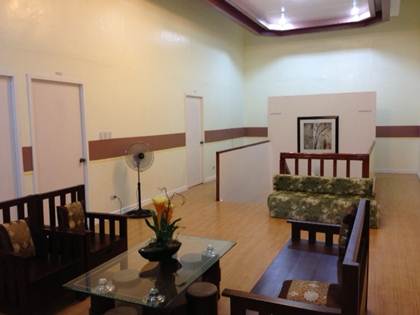
Recently we completed the Ladies’ Dormitory, which can accommodate about 70 lady trainees. The residential rooms are built around a nice lounge, where the ladies can gather for informal meetings and activities. The ground floor of the Ladies’ Dormitory houses trainers’ offices, a teacher’s guest room, a visitor’s guest suite, and a dining hall.

The men’s dormitory is situated next to the ladies’ dorm and can accommodate about 40 men.

Lounge in ladies’ dormitory
Area outside dormitories for small-group and informal teaching

The area in front of the dormitories, which used to be a mahogany “forest”, has been converted to a large “outdoor classroom.” Tables and chairs have been constructed on concrete bases under the shady mahogany trees for small-group meetings and for informal teaching. We hope that this campus atmosphere will enhance the learning experience of our trainees.

Since our trainees come from many different parts of the Philippines and Asia, and from many different backgrounds and experiences, they can learn much from each other before being sent out to different parts of the Philippines and Asia to serve in many diverse communities.

So far our graduates have been sent to work in needy communities in Philippines, Cambodia, China, and Indonesia, and from the reports that we have received they are doing well as community development workers helping needy Asians help themselves.

Our next batch of trainees will be trained as TESOL (teaching English as a second language) teachers from Jan to June 2013. We hope to train about 50 such teachers to be sent to Goducate Language Centers in different parts of Asia.

Goducate holds Christmas event for neighbors

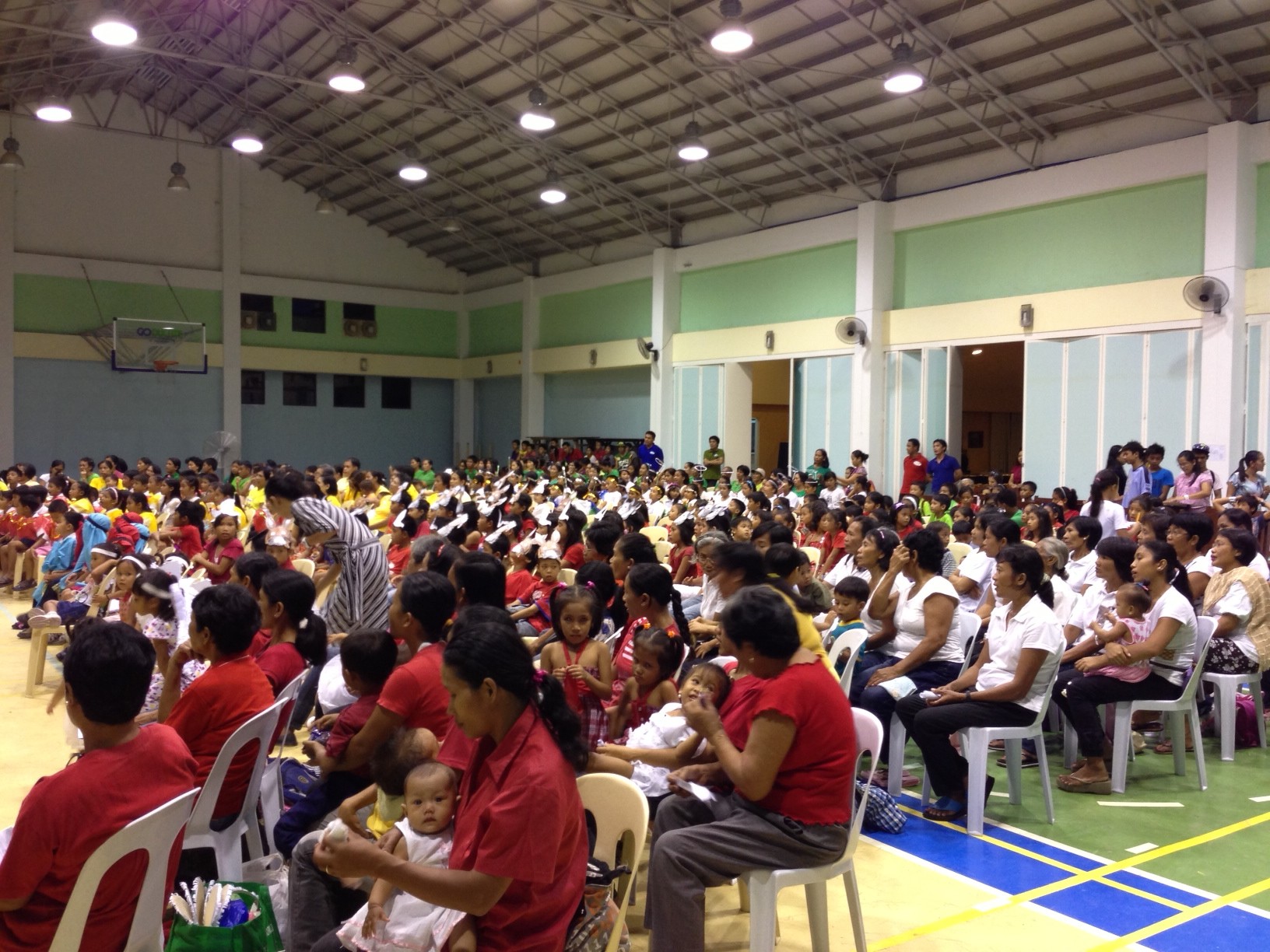
On Dec 13, Goducate Training Center in Iloilo, the Philippines, held a Christmas event for four neighboring communities. Over 500 people excitedly arrived many hours before the start of the festivities. For most of the children, it was their first time in a swimming pool. The night ended with very creative Christmas performances by the various communities. For most it was the highlight of 2012.

These four communities are where our trainees have been serving as part of their practical training to become community development workers.. Our trainees visit these communities several times per week to teach literacy, livelihood skills, public health, and to mentor children.

Most of our trainees inform us that this hands-on work in the community is the best part of their training. Through this community work, many lessons have been learned, many bridges have been built between Goducate and the villagers, and many useful skills have been imparted. These trainees have just graduated and are sad that they have to leave their new-found friends.

To minimize the “gap” that the communities may face between successive batches of trainees, Goducate Training Center staff and faculty have formed “follow-up” teams to continue their service to these communities, until the next batch of trainees arrives in Jan 2013.

500 eager participants
First time ever!