From the eyes of a first-time visitor to the Goducate Training Center (GTC)

Last 13-15 Nov 2012, I visited the Goducate Training Center (Iloilo) together with 3 people from Goducate HQ and 3 Singaporean visitors. My main purpose for the trip was to assist in the administrative aspects and policies of Goducate. Little did I know that I would also join the second trio of people in exploring the training center.

Lani and Maja

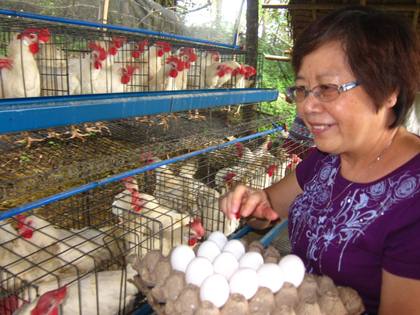
Vince, one of the GTC staff members, volunteered to tour us around at six in the morning. Being touted as the latest tourist spot in Iloilo, GTC is huge. There are several attractions which catered for private individuals and corporate gatherings, like the swimming pools, zorbie rides, horse-ride, zip-line, rock-climbing, Sky city (tree houses), in-house restaurant and facilities for team building activities. I gamely rode the zip-line twice, fed the pangasius fish, fed starving tilapias at the fish spa, learned about the rice & catfish model, was intrigued by the African night crawler worms and the vermiculture process. I also helped to gather fresh chicken eggs, smelled the organic plants, rested at the gazebo (the highest point of the Goducate training center) and hiked almost around the place. I stayed with the other Singaporean visitors in the second floor of an air-conditioned comfortable accommodation.

There were plants and trees all over the place: Duhat (Java Plum), Atis (sweetsop or sugar apple), hanging squash, bitter gourd, papayas, mangoes and tomatoes, to name some. Most of them were past their harvesting season, so this tourist was not privileged to bring back any organic fruit or veggie. Dormitories and drainage system were still being improved. Some of the pavements were also being developed. The place was busy with the on-going constructions and guests from schools and barangays. But at the end of the day, the place was quiet.

collecting eggs
checking out the organic plants at the Goducate training center

To refuel us from the mental exercise of our daily administrative meetings and the walking and hiking, the delicious food prepared by Chef Bambi and her team was a real treat. The kitchen staff was neat.

GTC is home to the trainees who are being equipped to help needy Asians help themselves. Courses offered were in connection with the Community Development Work and English literacy. There were trainees from Cambodia and Laguna during that time. Trainees were required to converse in English outside their dorms.

Typical of Filipinos, the GTC staff and workers are very courteous. I thank all the cheerful staff and volunteers for their hospitality. All in all, my short stay in GTC was well-spent and I look forward to go back there again, especially during the mango harvest time.

For booking reservations/inquiries, contact:

Brgy. Sto.Angel, San Miguel, Iloilo. Philippines
Tel: 3367037 (Iloilo liaison city office) or
Tel: 09225506199 (Goducate Training Center, Iloilo)
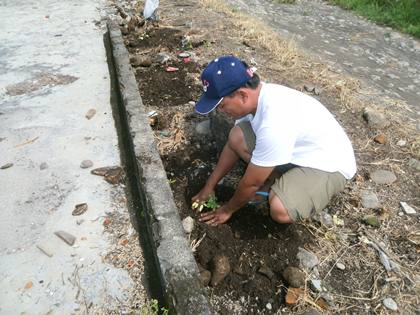
Goducate helps needy village folk in Indonesia plant moringa

Transplanting Moringa seedlings in Lau Ban-Ban

Come to Lau Ban-Ban in Binjai, North Sumatra, Kupang in East Timor, or Serpong Jakarta in Java and chances are you will find Daun Kelor or Merunggai in the backyard of some households. Scientifically known as Moringa olefeira, this miracle tree is extensively cultivated worldwide but is practically unknown to most Indonesians until its importance was recently highlighted to them by Goducate through theoretical and actual training.

Moringa is known for its edible leaves, flowers, fruits, roots, and seed oil, and has been traditionally used for herbal medicine to treat many ailments. These parts of the plant are rich in protein, minerals, beta-carotene, thiamin, riboflavin, and other vitamins, particularly vitamins A and C. The seeds contain 19- 47% oil and are rich in fatty acids (palmetic, stearic, behmic, and oleic acids) and can be used for human consumption, illumination, and cosmetics and soaps. The oil is also valued for its power of absorbing and retaining odors, and is used by watchmakers as lubricants. The roots are used as a condiment or garnish after they have been peeled, dried, and mixed with vinegar.

People with average health find a welcome boost of energy with moringa. Tests have shown that pregnant women who took moringa recovered faster from anemia and had babies with higher birth weights, while breast-feeding women had increased milk production with moringa. It can be used to cure cuts,scrapes, sores, and rashes, and can modulate the body’s defense system. Extracts from dry leaves, stem bark, and flowers can, respectively, heal ulcers, moderate high-blood pressure, and lower blood sugar, while the extract from dried powdered leaves has a very potent depressive effect on the central nervous system, resulting in significant muscle relaxation, decreased body temperature, and increased sleep time.

A small, fast-growing evergreen that reaches up to 12 m high, Moringa is characterized by its spreading, open crown of drooping, fragile branches, feathery foliage of tripinnate leaves, and thick, corky, whitish bark. It has been observed to tolerate temperature fluctuations from -1 to 48oC. It is drought tolerant and is known to thrive in places that have annual rainfall of as much as 1,800 mm. It grows well from sea level to 1,200 m elevation in most light- to medium-textured soils, but best growth occurs in sandy loams with a pH between 5.5 and 7.5. Propagation is also possible with cuttings, but studies show that trees propagated from seeds produce longer roots.

We hope that in the immediate term, more needy Indonesians would be inspired by Goducate to plant Moringa for fresh consumption and for processing into tea, micronutrient powder, probiotic capsule, juice, or energy drink, thereby improving their nutrition and health.

Lau Ban-Ban folks who attended the lecture on moringa
Lexon, a Goducate trained community development worker, shows proper mixing of soil medium for moringa
Transplanting Moringa seedlings in Lau Ban-Ban

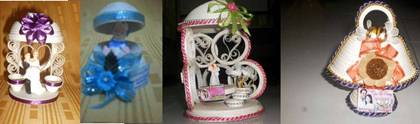
Making decorative items is a Goducate livelihood program in Laguna

Goducate’s aim is to help the needy help themselves, not only by helping them through their schooling but also by offering them livelihood projects. Making decorative items out of rejects from paper factories is a Goducate livelihood program that has been started in Laguna.

A Goducate volunteer had learnt how to make these products from a friend who had attended a seminar on the technique. Initially this lady worked for her friend, but later decided to work with Goducate’s head of livelihood projects in Laguna to offer it as a livelihood project to parents of the children who attend Goducate Literacy Centers. Since the start of the program at one learning center in early October, the program has been extended to three other centers, with some 35 women taking part.

There are five basic designs in plain white that can be bought as they are. The women also produce decorated versions of these basic designs.

The women have been marketing their goods by personal visits to stores, and also online. A gift store in San Pablo City (a place where people go to buy such decorative items and souvenirs) has placed an order for 1000 items. Many have been bought as “giveaways” for weddings, and orders have been placed for several hundred pieces to be given away at two other weddings.

Scrap paper, the basic material
Part of the molding process
Samples of product