Goducate Training Center is ready!

Goducate Training Center (GTC) in Iloilo, Philippines, is ready for its first intake of trainees. So far over 30 trainees have been interviewed and accepted for full-time training. Several more are presently undergoing their interviews to assess their suitability to be community development workers (CDWs) in poor Asian communities.

The trainees will undergo training in agriculture and other livelihood skills, teaching English, communication, and a host of other topics for the next 8 months. Much of their training will be “hands-on” training. For example, besides attending lectures on basic agriculture, they will have their own patch of land on which they will plant their a crop. The food that the students produce will be the food what they will be eating. In this way, they will first learn to help themselves before they go out to needy communities to help Asians help themselves.

Similarly, their ability to speak and teach English will be learned not only in the classroom but more importantly in their daily conversations with the other trainees. Trainees are allowed to use their own languages/dialects only in their dormitories. All lectures and discussions will be conducted in English and those who use their languages/dialects will be fined.

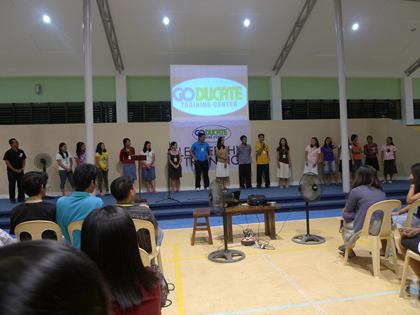
Introduction of some of the 2012 trainees.
Leadership Seminar for potential GTC trainees

A good part of their training will involve actual community work with the neighboring communities, so that our graduates will be familiar with real-life community work. They will teach English to children in the neighboring schools. They will also teach home-based livelihood skills to ladies in the neighboring communities and agriculture to farmers the surrounding farms.

Most of the trainees are Filipinos, but trainees from China, Indonesia, and Cambodia are also included in our 2012 intake.

GTC hopes to produce CDWs who are passionate, committed and competent to help needy Asian communities to help themselves.

GTC hopes to be Asia’s best center for training CDWs.
Goducate starts life-guard training in Laguna

Goducate aims to help Asians help themselves. In Laguna, Philippines, we’ve imparted livelihood skills to help many people there. Many ladies are now supplementing household income by producing soap, dish-washing detergent, fabric conditioner, and perfumes for sale to their communities. Many young people have been trained to teach music and the money they earn by giving music lessons helps fund their own schooling or music lessons. Recently, many men have been trained to be basketball referees or table officials so that they can earn money by officiating at basketball competitions.

Last week I was there to watch the kickoff of another livelihood training program, namely, training young men to be life-guards and do swimming-pool maintenance. Laguna is known as the “Resort Capital of the Philippines” because of its proximity to Manila and the presence of many hot-spring resorts there. Most of these resorts have swimming pools. Philippines’ law requires the presence of life-guards at all public pools.

A licensed life-guard and well-known swimming coach from Manila, Jojo
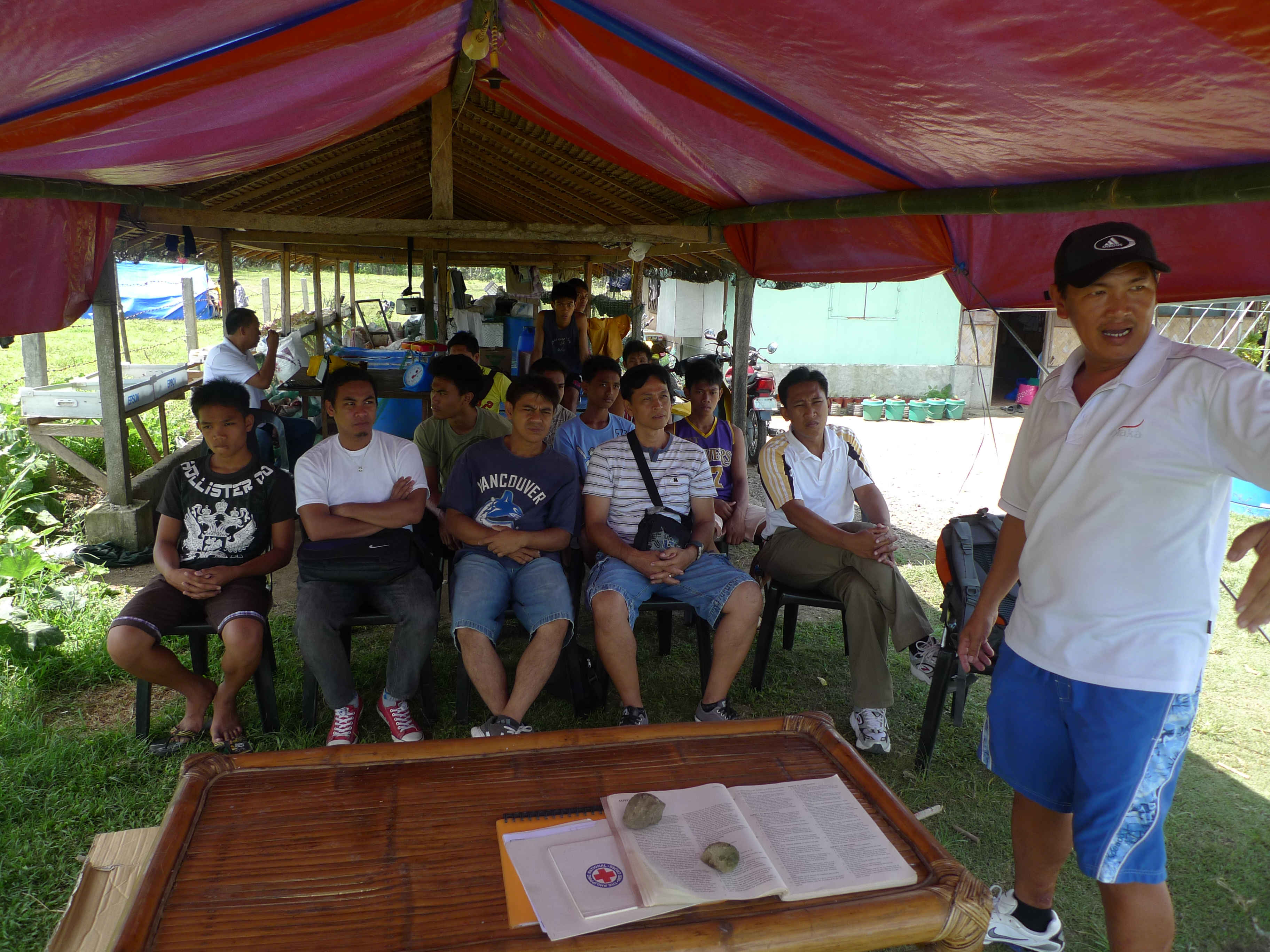
Rivera, who is also a basketball coach who has helped in our basketball program, volunteered to teach our young men life-guard skills. Eight men were selected to undergo an introductory course in life-guard skills. The two-hour introductory course conducted in the Goducate Model Farm was followed by another two hours of practical life-saving in a nearby swimming pool.

Coach Jojo lectures on the basics of life-saving
Coach Jojo demonstrates the art of saving a child

We hope that some of these eight men will be found to be suitable to undergo further training so that they can be certified life-guards and to be competent at maintaining swimming pools.

"This is how you save a drowning man!"

Goducate hopes that this will be another means to help Asians help themselves

Students From Goducate Literacy Centers Find Jobs

Many of the students at the Goducate Literacy Centers in Sabah joined as illiterate teenagers. Up to then they had spent their lives hanging around with nothing to do and with no prospects for the future because, as undocumented aliens (people with no identity papers), they were not entitled to state schooling. But after a year or two at the center learning literacy and numeracy, they have been able to find jobs. Some stay on at the centers as assistant teachers. Some then go on to find work outside. One returned as an assistant teacher because she found teaching more meaningful. Others went straight out to look for work.

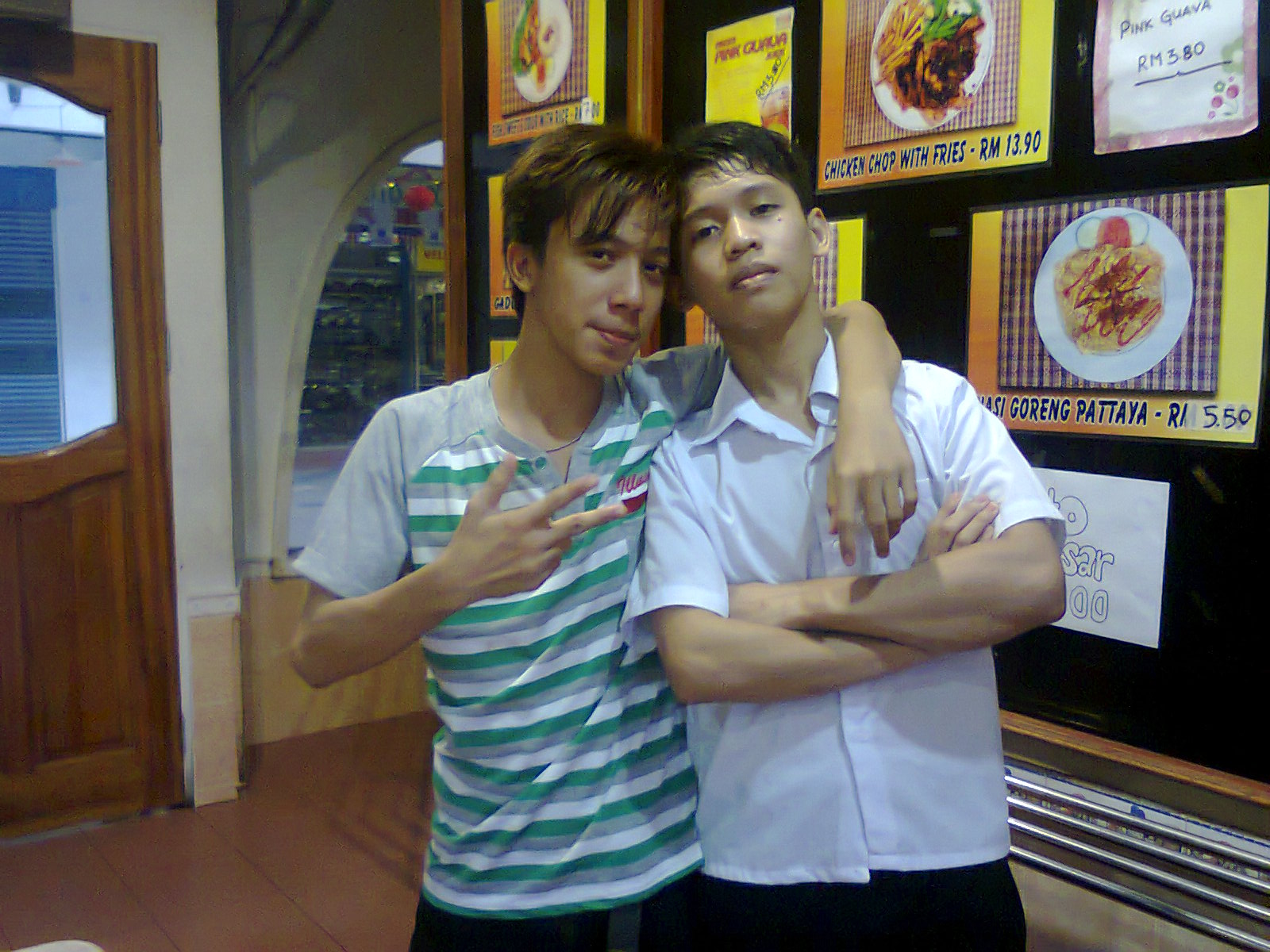
Waiters J in striped shirt with H

Two boys (J and H ) who started as assistant teachers found work as waiters in October last year. But on their own initiative they learnt to cook some of the restaurant’s delicacies. When we revisited the restaurant recently, we were bit anxious to find only J there, but he assured us, “H is here, but he was assigned now inside [in the kitchen]. He was promoted as our assistant chef. He’s cooking your orders right now—a serving of bangus [milkfish]”.

H as assistant chef

Another day, I went for lunch at the market with one of our teachers from a center up in the hills. She told me that many of her pupils are working in that area as waiters and waitresses, or in grocery stores as salespeople. On their days off, they often visit their alma mater centers, sometimes to perform special numbers for the children.

On another occasion, I was approached after badminton by a teen from another center. I could not recognize her because she was looking so well groomed. G is the daughter of one of the teachers (M) at that center, and is now a salesgirl at a grocery store. Her boss asked her, “Where did you go for schooling?” She replied, “I didn’t attend any formal school. I just learned from my mother”. Now her boss wants to her to be a cashier.

G, salesgirl to be promoted to cashier, with teacher M, her mother

Goducate is pleased to know that the women, mostly mothers, whom we have trained to be teachers at our literacy centers are producing “graduates” able to join the workforce outside.