Parents of children at Goducate Learning Center in Philippines learn to bond with children

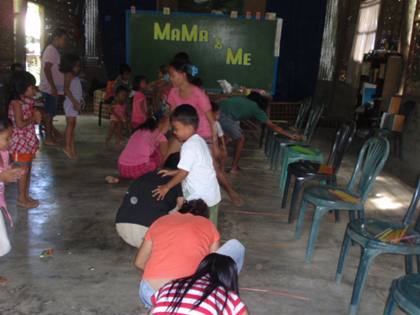
A fortnight ago parents of the children attending the Goducate Learning Center in Lalao, Laguna, were brought together to attend a session with their children. The session, called Mama and Me, was intended to emphasize to the parents the importance of good communication with their children and of teaching their children and supervising them while they do their homework and assignments. For the children, the intention was to impress on them how much their mothers love them.

The session started with me talking about the important role mothers have in building the lives of their children, which I hope gave them some encouragement. Then we went on to the games and other activities.

For any work to succeed, the laborers ought to be united and respect each other. Hence we plan to have a session at the kindergarten every month to foster good relations with the parents and impress on them the importance of their cooperation in building up the lives of their children. In other words, we want to teach them to help themselves and their own families

Mothers and children at play
Mothers and children at play again
Mothers helping children with artwork

Lifepegs volunteers visit Goducate headquarters

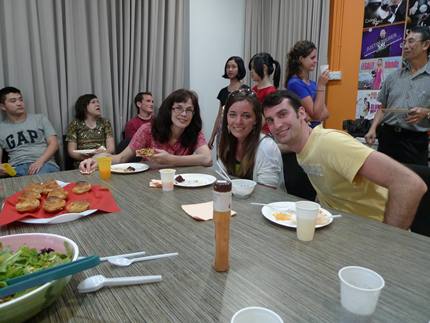
Several of our Lifepegs volunteers have been spending part of their winter break in Singapore. Most of them are teachers of English at universities in northeast China. One of their evenings here was spent at the Goducate office. It was a time for them and the Goducate headquarters team to get to know each other, for them to tell us about their experiences in China, and for them to learn something about Goducate work outside of China.

Lifepegs is an international lifeskills activity club based in Changchun, Jilin Province. Most of its members come from the 70 or so universities in the area. On top of that there are several Lifepegs societies within some of the universities.

Lifepegs activities are geared towards providing young adults with unique opportunities for healthy relationships, essential lifeskills education, and new and exciting forms of recreation. Its tagline is “Adventures You Can Hang Your Life On”. Through the club’s various activities, Lifepegs members learn about other cultures, about networking, about management, and about leadership.

Goducate hopes that the lifeskills learnt through Lifepegs will produce people who can contribute to globalization and to helping other needy communities.

Lifepegs volunteers at Goducate headquarters
Lifepegs volunteer telling of his experiences in China
Goducate director Paul Choo updating volunteers on Goducate work outside China

Goducate Training Center models rice-fish farming system

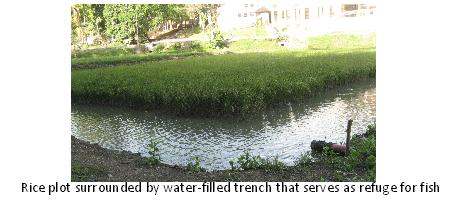
At the Goducate Training Center in Iloilo, Philippines, our agriculture team is modelling a rice-fish farming system in support of Goducate’s “GoFeed” mandate. The results, so far, are promising. The agronomic performance of the rice plants are impressive and the fish are progressively increasing in size and weight.

Popularly known as rice-fish culture, this technique is significant for its symbiotic relationship feature. The fish eat insect pests, fertilize the plants with their droppings, and aid in oxygen circulation. In turn, the rice plants provide shade to the fish, protect the fish from predators, and supply supplemental feeds through decaying leaves.

Two rice plots, approximately 600 sq m each, were prepared by digging perimeter trenches measuring two meters wide and one meter deep. The trenches serve as refuge for the fish during intermittent draining of the ricefield. After planting, each plot was separately stocked with 1,000 fingerlings of Nile tilapia (Tilapia nilotica) and African catfish (Clarias gariepinus). Starter feeds were given for the first month. After that floater feeds were supplied.

Our visitors have seen the practical and replicable aspects of the rice-fish model. The major requirement to succeed in this technology, however, is reliable water supply. A distinct advantage at GTC is the presence of a water impounding project which ensures the technical feasibility of integrating fish with rice throughout the year.

There is empiricial evidence that rice-fish culture can increase rice yield up to 10%. Aside from supplying the staple and protein needs of the household, it also has the potential to produce a net farm income that is about five times more than what a farmer usually realizes from rice monoculture.