How Goducate expands in Sabah

Goducate plans to have 100 learning centers in Sabah by the end of the first quarter of 2012. We now have 17 centers and some 2000 students. How do we decide where to start our next center? Generally we don’t have to go looking. It’s the villagers who seek us out. Jestoni’s story is one example of how keen villagers are to have a Goducate learning center and how Goducate expands in Sabah.

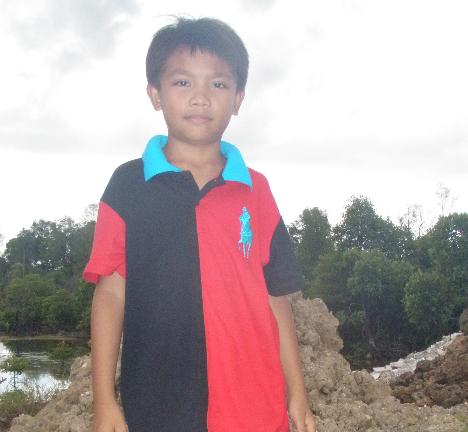
Jestoni

Jestoni used to look with longing and envy at children in school uniforms on their way to school each morning. But like so many others in his village, his family does not have the proper documents that entitle him to a place in the local state school.

One day he heard that a “school” had opened nearby. This Goducate learning center was across the river, 40 minutes away on foot. He begged his mother to enrol him there, but the teacher did not accept him because the class was too full. It took his mother’s friend to let our area coordinator know of Jestoni’s story. Our area coordinator then persuaded the teacher to take him in. However, one afternoon, while walking home, Jestoni was offered Rm50 (USD 16) by a man to enter his van. Jestoni ran home as fast as he could and told his mother what had happened. That was the end of his going to this school.

Then another learning center was opened, again on the other side of the river, but this time Jestoni would have to get there by boat. Really wanting to learn, he went without telling his mother. He and some other boys rowed a “sampan” (a small rowing boat) to look for the school. They found it and were very happy to be able to attend classes that day. But on the way back, the sampan capsized.

His mother was very alarmed. Seeing her son’s determination to attend school, she asked that we start a learning center in her house. Now Jestoni and his younger siblings and other children in their community have a learning center right in the midst of their simple dwellings.
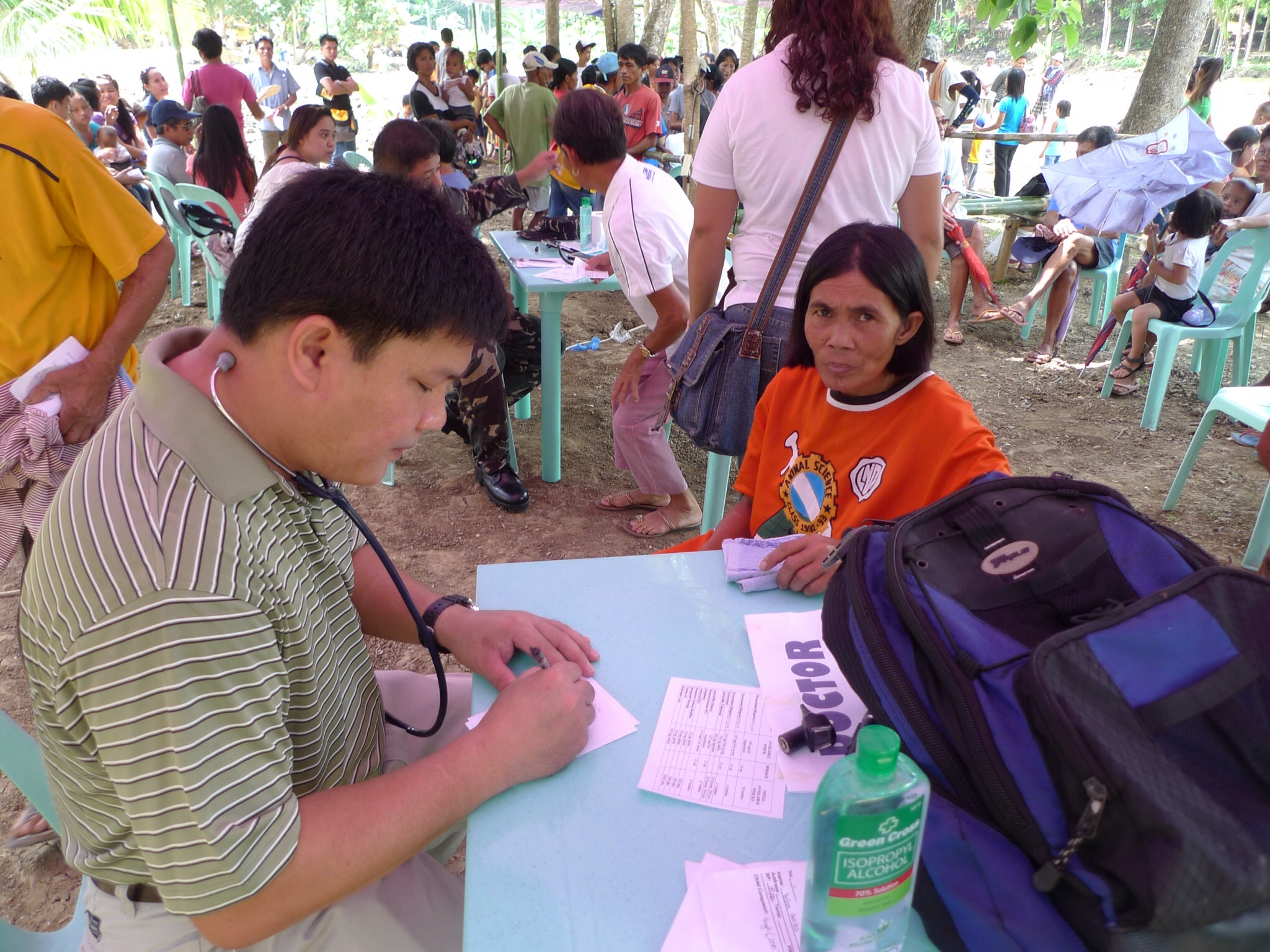
Goducate’s dental and medical services to the needy

Goducate’s philosophy is to “help needy Asians help themselves” by Going and Educating them—and then encouraging them to help others with what they’ve learned. We believe that this is better than just giving them something or some help.

However, there are certain circumstances in which we have to provide help that is not educational or help that they can then use to help others. For example, in emergencies timely help is often more appropriate then education. If a person is starving because of a flood, it’s more appropriate to feed him first before attempting to teach him how to produce more crops from his farm.

In our work with needy communities, we’ve often found that we need to rectify medical and dental problems before we can move on to “go and educate” them how to help themselves, and then help others. In some of the communities that we work in (eg, Sabah) the majority of people have never ever seen a doctor or a dentist. Chronic debilitating illnesses and rotting teeth are part of their lives. Someone with a toothache (without Panadols or Aspirins) is not able to learn anything effectively.

When we first sent in a dental team to Sabah, we ran out of local anesthetic on the first day of our work because hundreds of people came—with many requesting to have all their teeth (rotten or good) pulled out. While the dentists were at work, they realized that many of their patients also had medical and surgical problems that needed urgent treatment, but they lacked the medicines and surgical instruments needed to help them. Future teams will include general surgeons.

We are grateful for a dedicated team of volunteer dentists, doctors, and surgeons from Iloilo, Philippines, who offer their skills regularly to help the needy.

A kind sponsor of Goducate, Kenneth Aw, through his company KSurgical Pte Ltd, has also given us the dental and surgical instruments needed for our work.

Dental extraction
Medical consultation

Goducate livelihood training helps villager increase her earnings

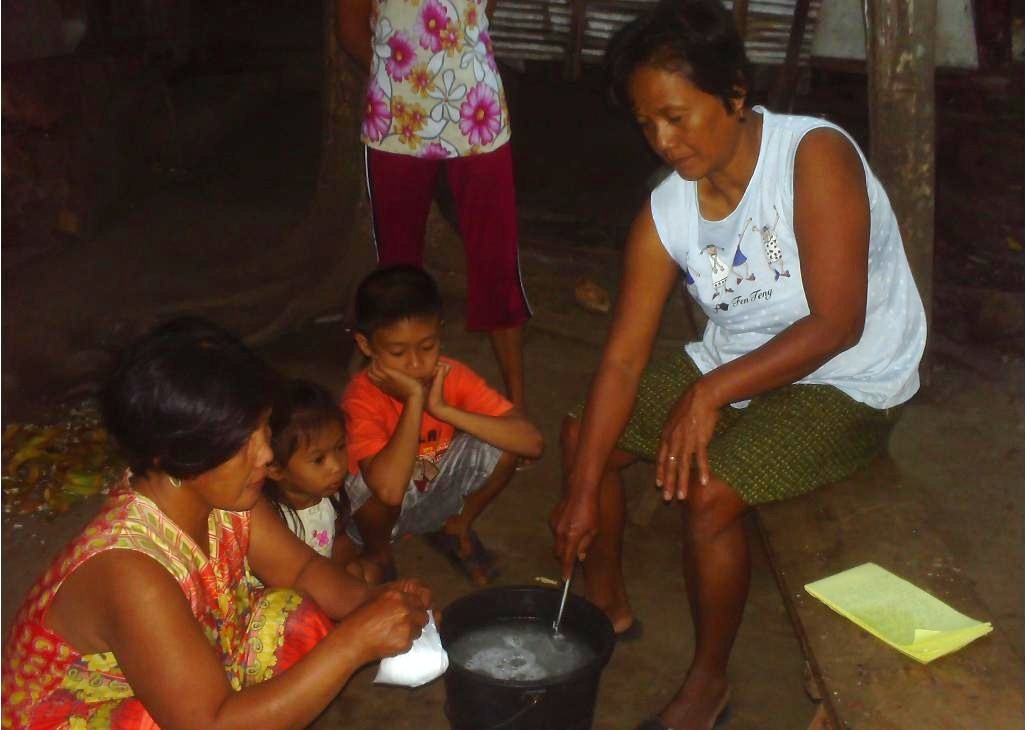
Two months ago Jonatan, our livelihood trainer, went to Talahiban to teach the villagers there how to make liquid soap. One of the villagers is now reaping the profits of this training.

Nanay Remy, a widow, used to go to the mountains to collect fallen coconuts, from which she would make copra, the dried meat, or kernel, of the coconut. She used to earn 50-70 pesos ($1.10-1.60) a day doing this. With the liquid soap she is now earning an additional 80-100 pesos a day. This has made it easier for her to support herself and her daughter, Mary Jane, a second-year high-school student and a clarinetist in the Goducate orchestra. Previously there used to be times when Mary Jane could not afford transport to school and had to make the 3 km journey on foot.

Nanay Remy (in white top) making liquid soap

Nanay Remy believes that education for Mary Jane is vital to help them to survive. She was unable to give her older children, who now have their own families, a formal education.

Mary Jane