GoBasket Philippines Starts Series of Webinars

The Covid-19 pandemic brought sports activities to a halt, causing loss of livelihoods for many people in the sports industry. To help basketball coaches, referees, and leaders, Goducate’s basketball program, GoBasket Philippines, held its first online coaching training session on May 25-20.

Around 120 of these people from all over the Philippines attended this webinar, given through Zoom, a platform for audio and video conferencing.  The aim of the training was to train participants in holistic coaching, skills development, and the development of good moral values. The holistic approach looks at all aspects of an individual — the physical, mental, emotional, and spiritual — because athletes have other things going on in their lives besides sports.

The topics covered by trainers from different countries were:

  • Coaching Matters, by David “Boycie” Zamar, assistant coach of San Miguel Beermen Professional Team of Philippine Basketball Association;
  • Sports Chaplaincy, the provision of spiritual and pastoral care to sportsmen, by Mon Casuga, coach at AO1 Skills Academy;
  • Basketball Officiating, by referee George Magsino of Maharlika Pilipinas Basketball League;
  • Sports Livelihood, by Paul Advincula, head coach of the MalaysianBasketball National Team 1999 to 2016; and
  • Skills Development by Jefferson Codera, skills trainer of the US National Basketball Association Golden State Warriors.

The team of international and professional speakers, with their experience, knowledge, and practical tips, made the training session seem like a week-long basketball festival.

This GoBasket Philippines webinar is the first of several sessions to be held over a year to train and produce competent sports leaders to reach their own communities through basketball, the most popular sport in the Philippines.

*Our guest writer is Agape Abarte, a volunteer coach with GoBasket.
Project Sokh Saan at Goducate Children’s Home in Cambodia

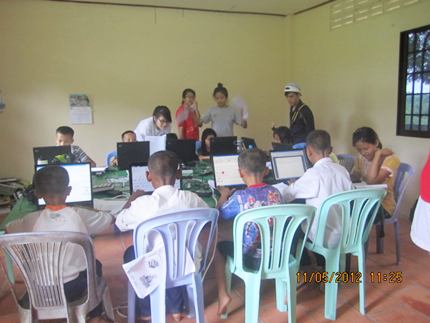
Together with 17 other Singapore Management University undergraduates I have just spent 2 weeks at the Goducate Children’s Home in Cambodia for our Overseas Community Service Project (OCSP), called Project Sokh Saan, meaning Blessed, So We Bless. Our aim was to equip the children at the home with basic information technology (IT) skills such as creating documents, spreadsheets, and presentations.

Our program consisted of reading, computer, music and sports classes. The plan was to spend the mornings conducting reading classes, and in between, to bring the children in turns to the computer room to try out the typing game, TypeFaster, as well as to teach them how to use LibreOffice, a free software very similar to Microsoft Office. However, although the children were able to communicate well with us, most had difficulty understanding what they were reading. Hence we placed more emphasis on reading and comprehension for the majority of the children and limited the computer training to the older children. The idea is that the older children would be able to pass on what they have learnt to the younger children, especially since they would be able to explain in Khmer as well.

Reading session

Computer training

The afternoons were spent in various activities. The first four afternoons were a continuation of reading and computer classes, then there were two afternoons dedicated to music theory and practical lessons with the recorder. There were also two sports classes during which we taught the children how to play soccer and games with the frisbee, and one afternoon was taken up by an art class on shading and lighting. The manuals we made for all our activities have been left at the Home for the children to refer to, along with the 11 laptops that we brought over.

On our last day, the children entertained us with their recorder playing, while we put up a short dance item and sang two songs for them.

It was a joy teaching the children, and we hope to return there one day. We thank the staff of the Home for their hospitality and cooperation, and for helping us to maintain discipline.

Guest writer Charmaine, Student from SMU

Baa baa white bundles of joy at Goducate Training Center

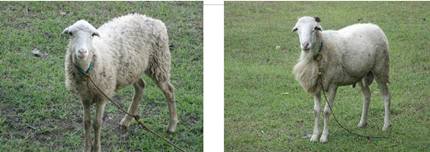
Six white bundles of joy arrived past midnight at the Goducate training center in San Miguel, Iloilo, The Philippines, a fortnight ago. The ram and five ewes are gifts to Goducate from Mr. Manny Delleva, a successful agri-entrepreneur from nearby Negros Island. They are hair sheep—ie, they grow more hair than wool, and are thus easier to take care of.

The ram is of Katahdin breed while the ewes are of St. Croix’s. The parental stocks were imported by Mr. Delleva from the US Virgin Islands in 2010. These sheep are excellent breeders. If allowed to fall in love unrestrained, each mature ewe can lamb twice a year with twins and occasional triplets and quadruplets. They have sweet faces and disposition, don’t jump on you, over you, or over the fence, and thus make excellent pets. They eat practically anything, even gmelina seeds, so they are excellent weed eaters and lawn mowers. They taste good and are an excellent source of lean organic meat. They adapt easily to tropical environment and are resistant to parasites and diseases common to small ruminants.

Eldest ewe (L) and ram (R) under restraint.

Being handfed seeds from Gmelina, a pulp tree endemic at the training center.

On their first day at the training center, the hierarchical “leadersheep” was immediately evident. The eldest ewe took charge and, being accustomed to range management, it led the flock in exploring the hillsides where they liberally took bites at whatever greens they found. A team of camp workers went after them, roped the leader, and towed it back. Sheep have a strong instinct to follow the one in front of them, so it was easy to bring back the rest of the flock into the open field. From then on, every day the eldest ewe has been harnessed by a rope secured to a stake to avoid a repeat of the “wandering” incident. The ram has also had to be restrained because it tends to take a secondary “leadersheep” role leading the younger ewes to the vegetable patch on taste-test sorties.