Art contest held to mark Nutrition Day at Goducate Literacy Center in Laguna

About 60 parent-pupil pairs from the five Goducate Literacy Center sites in Laguna, Philippines, participated in the drawing contest held on Nutrition Day on July 25. That Nutrition Day was part of the nation’s observance of Nutrition Month, whose theme was Gutom at malnutrisyon, Sama-sama nating wakasan (Together, we can end hunger and malnutrition).

For the contest, the parents outlined the shapes of the different vegetables and fruits. Their children, who are attending Goducate Literacy Center nursery classes, waited with excitement for their turn to color the drawings.

In this fast-food generation, children prefer to eat junk food such as hotdogs, burgers, chips, soda, and processed food over fruits and vegetables. A study from the Food and Nutrition Research Institute (FNRI) revealed that Laguna is one of the provinces with the lowest consumers of vegetables. FNRI reported that a person may eat only 92 grams of vegetables a day, whereas the daily amount recommended by the World Health Organization is 400 grams.

Eating fewer fruits and vegetables may result in hidden hunger or deficiency of micronutrients such as vitamin A, zinc, and iron. Harvest Plus reported that hidden hunger can cause blindness, stunting, lower IQ and resistance to diseases, and can increase the risks for both mother and infant during childbirth.

After the children had colored their parents’ sketches, a simple gallery of the drawings was mounted on the wall for a brief presentation, as well as for the judges to pick up the winners. Three winners were picked from each of the five Goducate Literacy Center sites (Tranca, Maitim, Sitio Ulik, Sitio 74, and Talahiban).

We hope that teaming up parents with their children in the drawing contest will inculcate in parents, especially the mothers, the value of fruits and vegetables in the daily diet, and thus the health, of their family.

Mother helping child color picture
Completed works on wall for viewing

.

Making literacy program responsive to student’s learning needs

Knowing the learning needs of children, their learning abilities, and their learning styles will help teachers in designing a curriculum that will achieve optimum learning.

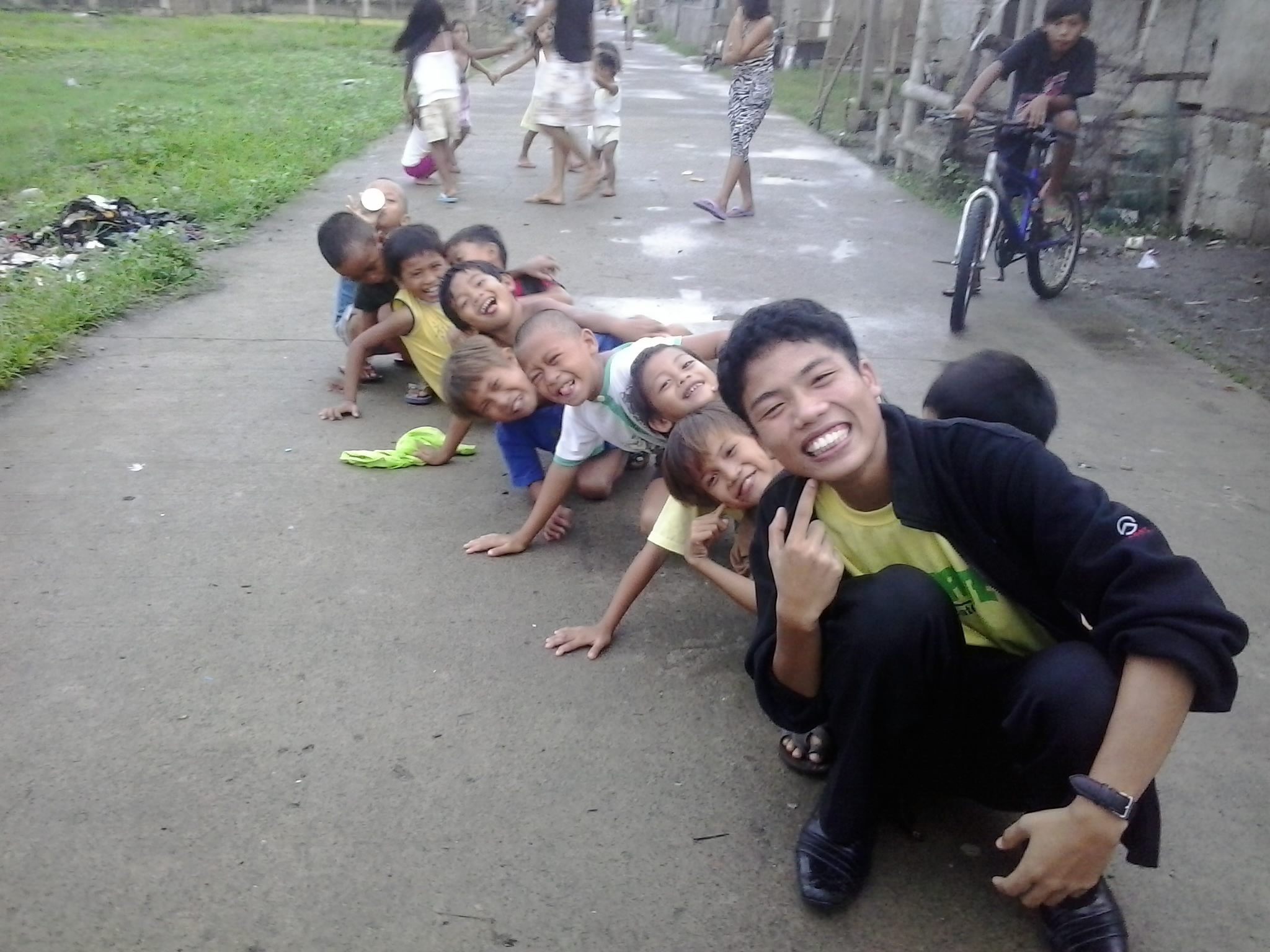
Last week, as a basis for implementing a community-based literacy program, we (a Goducate team of literacy teachers) administered a simple diagnostic test that we devised to the children and teens in Tagumpay, an urban village of about 2000 people on the shores of Laguna de Bay affected by the floods brought on by typhoon Hagabat and other typhoons. The test consisted of reading, coloring, and working out a word puzzle. The reading and word puzzle tests were designed for the elementary graders (ages 7-13), while the coloring and color identification exercises were administered to the nursery and preparatory grade children.

26 children participated in the diagnostic tests, which took place either in a small house of one of the residents, or by the way side. Some action songs and games were also used to assess the students’ ability to follow instructions and styles of learning.

We found that preparatory-grade pupils have difficulty in coloring the drawing sheets and in identifying the colors. Out of the 10 elementary-grade pupils aged 7-9, 7 had difficulty in reading. For the 10-13 year olds, lessons in correct pronunciation, reading comprehension, and vocabulary will be appropriate. We will now develop a curriculum appropriate for the community.

We had been in touch with this community some months back when they were first flooded out. Then we had informal gatherings with the children and teens telling them stories, facilitating games, and teaching them action songs. Some of us were then sent to the Goducate Training Center in Iloilo for a spell of training. On our re-establishing contact with the community, one mother said, “Before, you would look for these children. But now they are coming to you”.

We intend to bring in the mothers as our partners in the literacy program because they know better than us their children’s study habits and school performance. The mothers are busy with their household chores, but we intend to do a household survey to give us a glimpse of the socio-economic profiles of the families there, and then to plan a schedules so that the mothers can take an active part in their children’s education.

Enjoying a game
Doing a word puzzle
Singing with action