Using technology for Goducate health program in Sabah

Goducate’s health program in Sabah is implemented by our local health educator. Since most of the community served by Goducate there do not have access to state health services, our health educator is often consulted about health problems. We have been exploring how to support her through a telehealth system that enables her to consult our registered nurse based in Singapore.

We initially tried live teleconsultation, but because of unreliable 3G connectivity in the field, it was not possible; however asynchronous teleconsultation was.

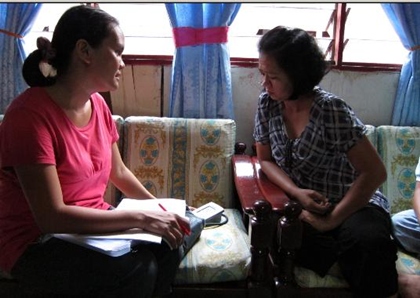
When our health educator is approached by a villager about a health problem, she will take measurements of some basic vital signs as well as record the villager’s medical concerns on a form that she will submit online to our nurse in Singapore. The clinical advice is then given in a form of skype chat/call to the relevant patient.

This online consultation does not cater for emergency situations, but rather for cases with chronic conditions. In the first two weeks of the trial, advice was given to 12 patients through this method.

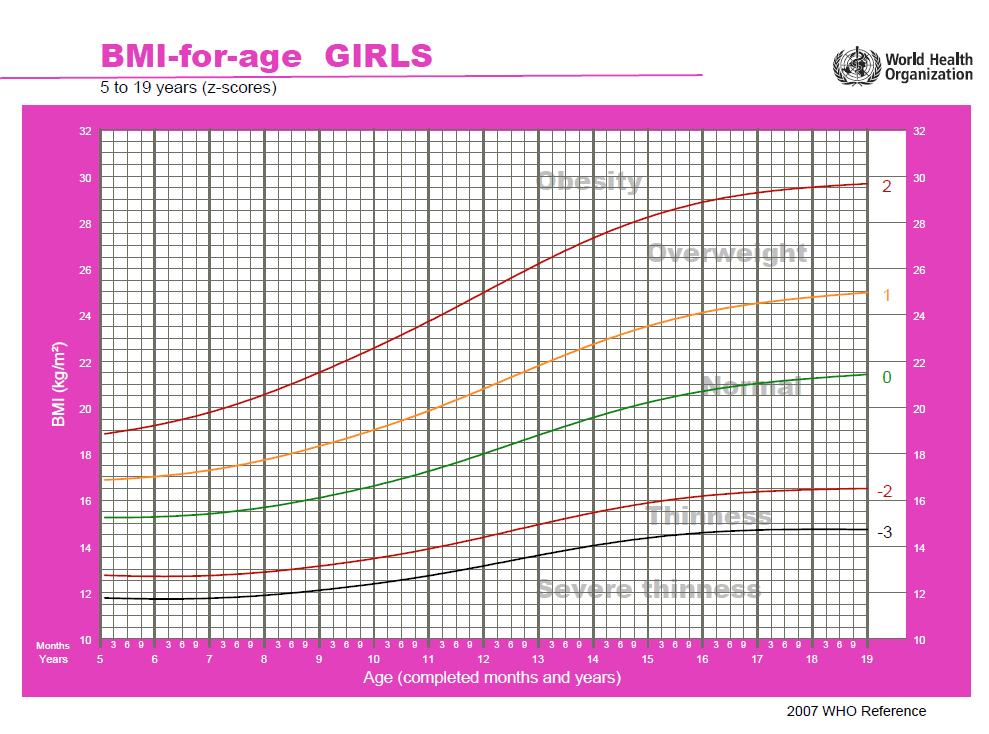
Another area in which we are trying to use free technological applications to help our health educator is in growth monitoring. Traditionally, health workers use the Age-BMI growth chart to plot measurements and detect a child who is malnourished or severely underweight.

Age-BMI for girls

Since this process is manual and can be very time consuming, and considering the vast number of students whose growth we are monitoring, a free application tool is used instead to obtain z scores (a measure of the degree of deviation from the mean) more quickly and accurately.

With this free application, known as Anthro Plus, our health educator needs only to input the student’s age, height and weight, and the software automatically calculates the z-score of the student.

Arthroplus z score

So far, these two technology tools have proven to be reliable and effective to keep the team in Singapore in touch with the team in Sabah.
Goducate screens for hypertension in Sabah

Most of the community served by Goducate literacy centers do not have access to state health services. Hypertension is common there because of the high salt diet. However, people there with hypertension are unaware of their condition and do not seek treatment until complications, such as a stroke, occurs.

Explaining about hypertension to parent

Goducate has decided to take a preventive approach with our anti-hypertension program. Armed with a simple consumer-grade digital blood-pressure machine, our health educator visits villages where Goducate has a literacy center to check the blood pressure of the students’ parents and to explain to them what hypertension is, how it comes about, and how to look out for its complications, such as heart problems, stroke, and kidney failure.

Those found to have high readings even after repeated measurements are advised to help themselves by doing the following:

– Lose weight if they are obese
– Make dietary changes such as cutting down on oil and salt
– Reduce or to quit smoking
– Exercise more, for example, by doing more gardening
– Seek medical treatment (for those with the more severely high readings)

The health educator will return to the village every 6 months to monitor the parents’ blood pressure.

Deworming takes effect in Goducate centers in Sabah

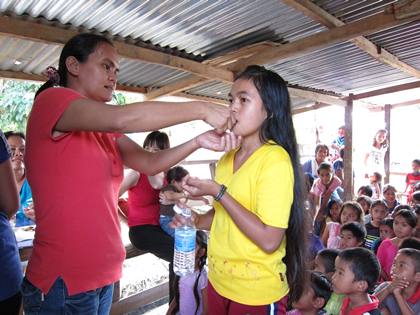
Since the start of our deworming session in April this year, our local health educator has visited 18 of our 24 literacy centers. She educates both the students and their parents about worm infestation and how to prevent it by paying attention to good hygiene.

Our health educator also measured the students’ heights and weights before giving them a dose of anthelmintic (deworming) medicine. These height and weight measurements will be used to give us an idea of the efficacy of the deworming program.

Health education class
Students learn how to wash hands
Measuring height
Giving deworming medicine

From the first round of measurements, about 20% of the students fall within the underweight growth curve, whilst 5% fall within the severely underweight curve. Feedback from the teachers, parents, and students from centers that have had the deworming sessions is that at least 70% of the students excreted parasites and are much more alert and energetic now.

Our health educator will be revisiting each center in 6 months’ time to re-measure heights and weights.