Students From Goducate Literacy Centers Find Jobs

Many of the students at the Goducate Literacy Centers in Sabah joined as illiterate teenagers. Up to then they had spent their lives hanging around with nothing to do and with no prospects for the future because, as undocumented aliens (people with no identity papers), they were not entitled to state schooling. But after a year or two at the center learning literacy and numeracy, they have been able to find jobs. Some stay on at the centers as assistant teachers. Some then go on to find work outside. One returned as an assistant teacher because she found teaching more meaningful. Others went straight out to look for work.

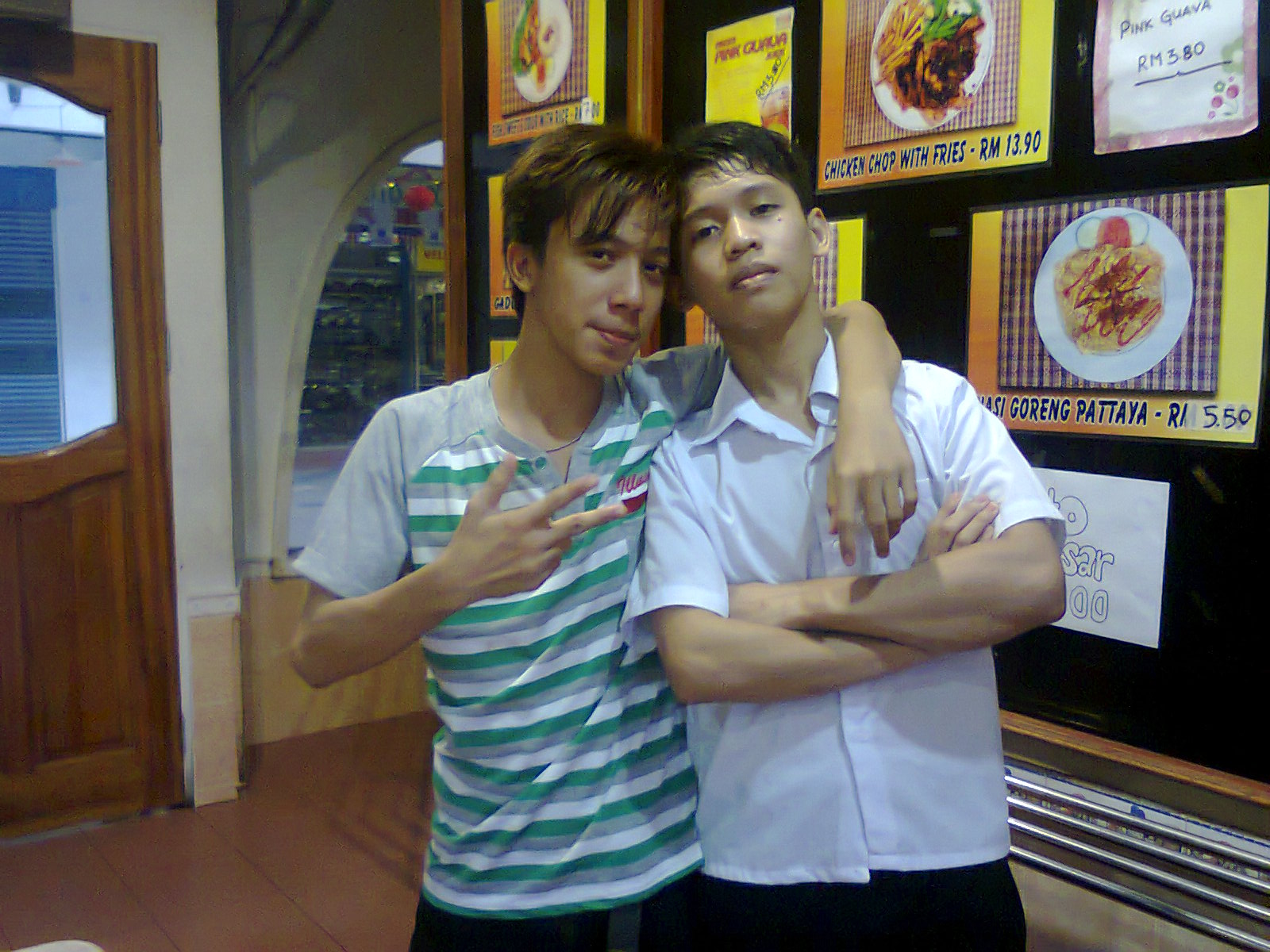
Waiters J in striped shirt with H

Two boys (J and H ) who started as assistant teachers found work as waiters in October last year. But on their own initiative they learnt to cook some of the restaurant’s delicacies. When we revisited the restaurant recently, we were bit anxious to find only J there, but he assured us, “H is here, but he was assigned now inside [in the kitchen]. He was promoted as our assistant chef. He’s cooking your orders right now—a serving of bangus [milkfish]”.

H as assistant chef

Another day, I went for lunch at the market with one of our teachers from a center up in the hills. She told me that many of her pupils are working in that area as waiters and waitresses, or in grocery stores as salespeople. On their days off, they often visit their alma mater centers, sometimes to perform special numbers for the children.

On another occasion, I was approached after badminton by a teen from another center. I could not recognize her because she was looking so well groomed. G is the daughter of one of the teachers (M) at that center, and is now a salesgirl at a grocery store. Her boss asked her, “Where did you go for schooling?” She replied, “I didn’t attend any formal school. I just learned from my mother”. Now her boss wants to her to be a cashier.

G, salesgirl to be promoted to cashier, with teacher M, her mother

Goducate is pleased to know that the women, mostly mothers, whom we have trained to be teachers at our literacy centers are producing “graduates” able to join the workforce outside.
Goducate teachers in Sabah attend health seminar

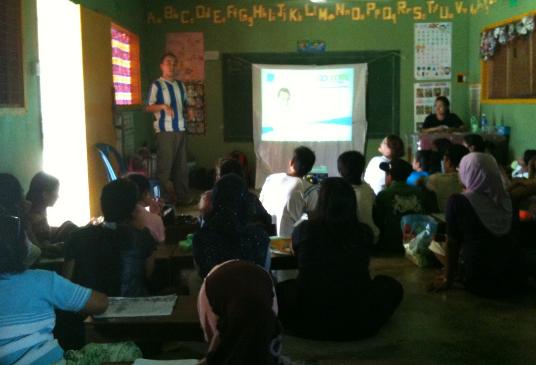
A short while after the health talk for parents and the de-worming session for the children at one of Goducate’s learning centers in Sabah, the teachers from all the Goducate learning centers in Sabah were brought together for what we hope will be the first of a series of health seminars for them. They see the children almost every day, and they are looked up to by the students as well as by the rest of the community, so they are in a good position to influence the community’s health—by teaching, as well as by administering simple treatments. But first they need to acquire knowledge about health.

Poor sanitation in the community
Teachers at the health seminar

Since parasitic worm infestations are common in the kind of areas this community lives in, and it is a topic that had been taught to one group of parents, I started the session with this topic.sa Like many of the parents who attended the earlier session, the teachers had obviously had these infestations themselves because many could recount their own experiences. Many also pointed out that they cannot change the (non-existent) sanitation system they have now. However, good personal hygiene practice can definitely help towards prevention of parasitic infestation. Hence the teachers were taught the 7 steps of proper handwashing. They were also each given a copy of a handwashing poster so that they could return to their respective villages and teach their students.

The session ended with two common first-aid skills—how to stop bleeding from cuts, and treatment of burns from scalds and flames.

De-worming for Goducate Center’s students.

One of Goducate’s learning centers in Sabah commemorated its first anniversary in an unusual way. The 60-plus students attending the two classes at this center underwent a de-worming session.

The teachers at our learning centers have observed that most of their children are malnourished, lethargic, and have a short attention span. These symptoms are very likely due to parasitic worm infestations and lack of a well-balanced diet.

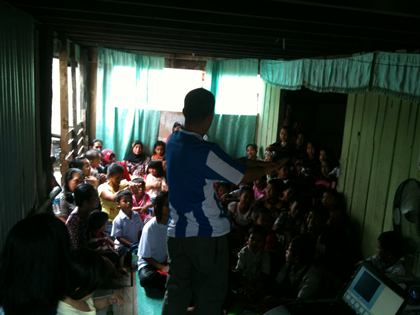
The event started with a health talk for both the children and their parents on parasitic worm diseases commonly seen in Southeast Asia. One of the contributing factors to parasitic worm infestation is that many of these kampong (village) kids grow up playing barefooted in the muddy soil below their houses, which are built on stilts above the mangrove swamps along the river banks or sea shores. Because of poor sanitation practice as well as poor hygienic practices, the soil becomes an excellent breeding ground for parasitic worms. As I spoke, I could see the parents nodding their heads in agreement with the various signs and symptoms I showed. Some of the parents could also share their own experiences of having parasites when they were young. I was happy to hear of their personal experiences because it will make it much easier for them to recognize and detect early parasitic worm infestation in their children. The kids expressed their dread of the outcome of parasitic infestations and couldn’t wait to learn how to avoid acquiring worms.

It was a good opportunity to reinforce the importance of observing personal hygiene, in particular through proper handwashing. During the handwashing demonstration, I was pleased to see so many of the parents actively going through the motions of the basic 7 steps of handwashing.

The session ended with distribution of deworming medication to all the students who were present that day. Goducate thanks the generous sponsors for the medical supplies and hopes to expand this de-worming program to the rest of our learning centers in Sabah the near future.

kids barefoot in the mud
Parents following good handwashing technique