Helping others help themselves begins at Goducate Training Center

Goducate aims to help Asians help themselves because Goducate believes
that its projects must be sustainable ones.

To ensure that this philosophy is entrenched in our culture our main training center, the Goducate Training Center in Iloilo, Philippines (where almost all Goducate’s future workers are trained) is designed to “help itself” and to be self-sustainable.

Besides the usual classrooms, dormitories and “laboratories” of a usual educational institution, GTC is designed with recreational and food and beverage (F&B) facilities to cater to visitors, especially educational tour groups from schools, universities, governmental
bodies and business corporations.

GTC has been designated as a tourism-site by the Municipality of San Miguel. Its cutting-edge agricultural projects and plots showcase modern Asian agriculture. Its agricultural faculty and students lead the edu-groups on interesting and informative tours that teach about modern, scientific, sustainable farming for the future.

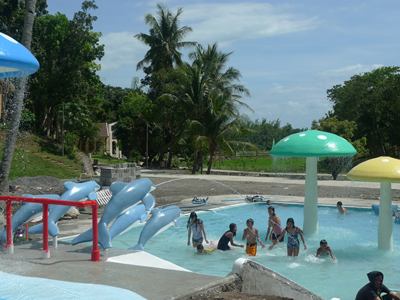
After these edu-tours, visitors are invited to enjoy GTC’s recreational facilities and F&B outlets. The revenue raised from the water-park, dipping pool, zip-lines, rock-climbing, horse-riding, fishing and restaurant is used to upgrade and maintain GTC and to provide scholarships for its trainees.

Besides this source of revenue from edu-tours, GTC trainees also work
on their agricultural plots. What they grow not only provides food for themselves, but more importantly teaches them the skills of modern sustainable agriculture—skills that they will share when they go into poor communities to help needy Asians help themselves.

Children's water-park
Rock-climbing wall

GTC trainees learn how to GO and EDUCATE

Two weeks into their six-month training and the new batch of international students at the Goducate Training Center are all primed up to becoming effective community development workers in Asia. The course contents are quite diverse but the main emphasis is on teaching them how to teach needy Asians help themselves through practical but scientific technologies to produce safe and wholesome farm products. Through hands-on training, they will learn how to follow good agricultural practices to ensure social, economic, and environmental sustainability—knowledge that they should be able to pass on to farmers and members of their household.

The diversity of the students goes beyond culture because they also vary in age, gender, and academic background. The common denominator, however, is their passion and eagerness to become effective change agents. Their first few days at GTC were spent on acclimatizing, bonding, getting acquainted with the faculty and staff, and learning the basics of various courses. For practicum, they had already been exposed to actual seed planting and harvesting of moringa pods, corn, rice, and fish.

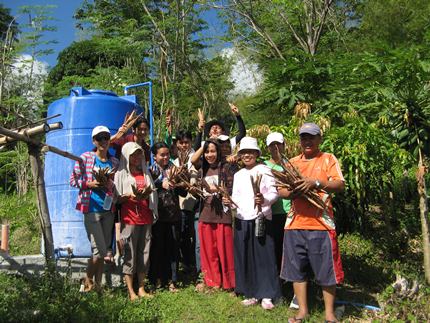
Harvesting moringa pods the Indonesian, Malaysian, and Filipino way
the Cambodian way
Students in the container garden with the corn they plucked

The following are impressions shared by some of the trainees:

“Before I thought that agriculture is boring but soon things turned 180 degrees for me. I learned to appreciate and love it. I was amazed to learn that plants can be successfully grown in nutrient-rich water. And to pluck a corn cob from its stalk for the first time ever? Simply amazing! I’m so excited to learn more .” —Jean, Malaysia

“I am very thankful to all my sponsors for enabling me to study at GTC to learn many things especially about agriculture. Coming from a children’s home and to another country for the first time, I am overwhelmed by the new and rich experiences. Surely I will have a lot to share with my own people after completing my study here.”—Nathan, Cambodia

“It’s a great privilege to be at GTC. In the beginning I thought agriculture is very boring but during the lecture on recent trends that included tissue culture, biotechnology, hydroponics, bubbleponics, aeroponics, and aquaponic, my interest on these things went up several notches. Now I am an eager student of agriculture.”—Lexon, Indonesia

“Magnificent. Intensive. Flexible. These are how I describe the place, training and fellow trainees. Magnificent in the sense that GTC is a venue where we can learn a lot of skills that can never be learned from a four-walled traditional classroom. Intensive because theory combined with hands-on are being taught by brilliant mentors and facilitators. Flexible as the six month-training is continually attuned with the absorptive capacity of its international students. As one of the future GTC-trained community development workers, I must therefore GO and EDUCATE!”—Nini, Philippines

Goducate trainees learn to help themselves

Goducate Training Center (GTC) in Iloilo, The Philippines, has just begun its  eight month full-time training of its community development workers (CDWs). A good part of their training is in agriculture, because many of them will be working with poor rural or semi-urban communities where malnutrition is a endemic problem.

A key principle of GTC training is that it is practical and hands-on, so that our graduates can really be useful to the communities that they work with. And a key philosophy of Goducate is that we teach “Asians to help themselves.”

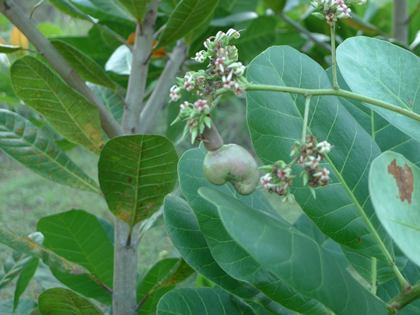
Cashew

Therefore, our trainees will each be given a plot of land to grow food. The food that the trainees grow will, we hope, provide 90% of their food needs. The key performance index (KPI) for our agriculture consultant and trainees is that they collectively produce 90% of their total food consumption at the end of the year. In this year, our trainees will be first learning to “help themselves” before they go out to teach communities to “help themselves.”

Onions grown in garbage bags

On my recent trip to GTC, I will pleased to see the place turning into a large productive farm. The trees that we had planted two years ago are now beginning to bear fruit. The vegetable fields are filled with lush vegetables. The tilapia fish are multiplying.

GTC must be able to support its own faculty, staff and trainees with food, otherwise how can we tell poor farmers that they should support their own families?!

Helping Asians to help themselves, must first begin in GTC!