

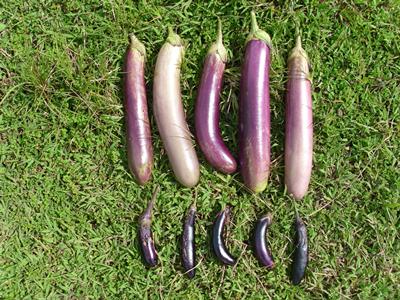
Many people think that the humongous plant cultivars with upsized leaves, fruits, tubers, bulbs, heads, rhizomes, and grains that taste delicious grown at the Goducate Training Center are a result of application of commercial fertilizers, or maybe of abundant sunshine. Or maybe even of the use of synthetic hormones. The secret, though, is in the use of the vermitea that we brew and apply to plants by soil drenching or foliar spraying.


To produce vermitea, earthworm casting (excrement) or vermicast is needed. At Goducate Training Center, we raise African Night Crawlers in pre-composted livestock manure mixed with rice straw and shredded leaves and twigs of leguminous plants. The vermicast is then brewed with chlorine-free water and molasses for 72 hours. The resultant vermitea should have a pleasant, earthy smell. If it smells awful, it indicates that bad microbes have overwhelmed the population of good microbes, and thus should be discarded.
The vermitea can be mixed with plain water in various concentrations. As much as 300 liters of sprayable material can be produced from only 1 kg of vermicast. The vermitea is applied within 8 hours from harvesting to maintain the potency of the aqueous extract. It should be applied once a week but we have found that spraying 2-3 times a week produces dramatic results.

Vermitea teems with microorganisms that include bacteria, fungi, protozoa, and non-harmful nematodes. They build a good microbial community in the soil and, over time, outnumber the bad microbes. They protect the roots as well as nourish and feed the plant. Roots penetrate wider and deeper. Unlike vermicast that takes days to mineralize and become available for root uptake, vermitea is readily absorbable when applied as a foliar spray. The microbes also attach themselves to the leaves and overcome the pathogens that cause mildew, black rot, and early blight. Vermitea also suppresses several other plant diseases as well as populations of spider mites (Tetranychus urticae), aphids (Myzus persicae), and plant parasitic worms that cause root cysts on tomatoes.
Our experience with vermitea has reflected research that has shown how vermitea has increased the germination, growth, flowering, and yields of various crops. We hope that we can pass this experience on to the needy to help them help themselves.