Goducate helps needy village folk in Indonesia plant moringa

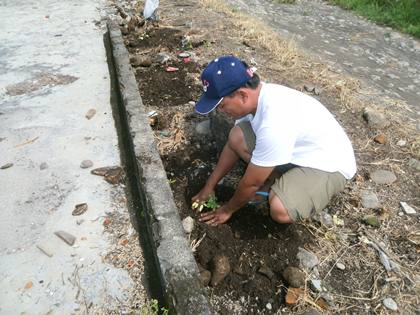
Transplanting Moringa seedlings in Lau Ban-Ban

Come to Lau Ban-Ban in Binjai, North Sumatra, Kupang in East Timor, or Serpong Jakarta in Java and chances are you will find Daun Kelor or Merunggai in the backyard of some households. Scientifically known as Moringa olefeira, this miracle tree is extensively cultivated worldwide but is practically unknown to most Indonesians until its importance was recently highlighted to them by Goducate through theoretical and actual training.

Moringa is known for its edible leaves, flowers, fruits, roots, and seed oil, and has been traditionally used for herbal medicine to treat many ailments. These parts of the plant are rich in protein, minerals, beta-carotene, thiamin, riboflavin, and other vitamins, particularly vitamins A and C. The seeds contain 19- 47% oil and are rich in fatty acids (palmetic, stearic, behmic, and oleic acids) and can be used for human consumption, illumination, and cosmetics and soaps. The oil is also valued for its power of absorbing and retaining odors, and is used by watchmakers as lubricants. The roots are used as a condiment or garnish after they have been peeled, dried, and mixed with vinegar.

People with average health find a welcome boost of energy with moringa. Tests have shown that pregnant women who took moringa recovered faster from anemia and had babies with higher birth weights, while breast-feeding women had increased milk production with moringa. It can be used to cure cuts,scrapes, sores, and rashes, and can modulate the body’s defense system. Extracts from dry leaves, stem bark, and flowers can, respectively, heal ulcers, moderate high-blood pressure, and lower blood sugar, while the extract from dried powdered leaves has a very potent depressive effect on the central nervous system, resulting in significant muscle relaxation, decreased body temperature, and increased sleep time.

A small, fast-growing evergreen that reaches up to 12 m high, Moringa is characterized by its spreading, open crown of drooping, fragile branches, feathery foliage of tripinnate leaves, and thick, corky, whitish bark. It has been observed to tolerate temperature fluctuations from -1 to 48oC. It is drought tolerant and is known to thrive in places that have annual rainfall of as much as 1,800 mm. It grows well from sea level to 1,200 m elevation in most light- to medium-textured soils, but best growth occurs in sandy loams with a pH between 5.5 and 7.5. Propagation is also possible with cuttings, but studies show that trees propagated from seeds produce longer roots.

We hope that in the immediate term, more needy Indonesians would be inspired by Goducate to plant Moringa for fresh consumption and for processing into tea, micronutrient powder, probiotic capsule, juice, or energy drink, thereby improving their nutrition and health.

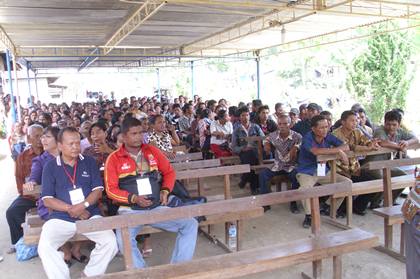
Lau Ban-Ban folks who attended the lecture on moringa
Lexon, a Goducate trained community development worker, shows proper mixing of soil medium for moringa
Transplanting Moringa seedlings in Lau Ban-Ban

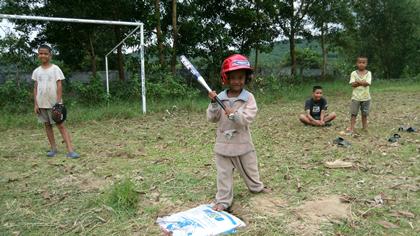
Boys at Goducate Children’s Home in Cambodia learn baseball

Talk about baseball to the kids in the Goducate Children’s Home (and probably elsewhere) in Cambodia and they will simply be disinterested. But show them the gear, teach them the baseball rules, explain the mechanics, let them have their first taste of the game at the diamond field, and they will so awe-struck and excited that they will keep badgering you with their new mantra: “Let’s play ball!”

Two months ago, the US Navy Seventh Fleet gave the Goducate Children’s Home with an assortment of supplies and sports equipment, including some baseball gear. 2 years ago, during the second phase of Cooperation Afloat Readiness and Training (CARAT) in Cambodia, some members of the US Navy, among them, musicians of the Seventh Fleet Orient Band Express, visited the Goducate Children’s Home. They played music with the children and involved them in basketball and soccer games as part of their community service project.

Players in position
Paul gets ready to hit the ball

In Cambodia, however, the national game is soccer, and the youth have not been exposed to baseball. To broaden their knowledge of sports, during my recent visit to the Home, I had a baseball session with the boys. 22 boys, aged 5-17, sgathered at the improvised diamond field for baseball lessons and impromptu practice. Two teams were then constituted at 11 players per team, with 9 in the field—pitcher catcher, 4 infielders, 3 outfielders—and two backup infielders. It was confusing and funny at first but the first tryout and succeeding innings at the diamond field were very instructive and exhilarating for everyone.


Goducate Indonesia trains farmers on coffee technology

In the North Sumatran highlands, coffee is the main source of income for many households. Productivity is marginally low, however, so the majority of the farmers are unable to earn enough to improve their family’s welfare. The presence of unscrupulous traders worsens the situation, resulting in high indebtedness among the villagers and pushing them to be mired in a state of helplessness.

Senile coffee plants needing rejuvenation
Rejuvenated coffee plants that the farmers can expect to have a year and a half after pruning to rejuvenate the plants

A year ago, when Goducate Indonesia sent a team to do an agriculture survey, it found out that the coffee production practices were largely traditional in North Sumatra. Nursery activities and plantation management were below industry standards. Processing of coffee beans followed the dry rather than wet method. Without fermentation, which happens only with the wet scheme, proteolytic enzymes and good amino-acids remain unlocked within the beans, so the outcome is brewed coffee with inferior aroma and taste. The traders attributed these negatives to the coffee cultivar. Our team, however, pointed out to the farmers that they were, in fact, cultivating the best coffee in the world – Coffea arabica. This was observed to be the dominant variety in Tapanuli Region. Mandheling, its popular trade name, was derived from the name of the Mandailing Batak Tribe.

When the Dutch colonists established coffee plantations in the late eighteen hundreds, the cultivar they planted was C Arabica. They told the natives not to pick the cherries since drinking coffee was unhealthy. The oppression of villagers by corrupt and greedy officials is exposed in the book called “Max Havelaar and the Coffee Auctions of the Dutch Trading Company”.

In order to help the needy coffee growers help themselves, Goducate Indonesia initiated trainings on coffee technology in the villages of Sipultak and Sidikalang some months ago. 90% of the participants reported that it was the first time they were attending a lecture on coffee. The topics focused on plantation establishment basics (layout, staking, hole digging, refilling, basal application of organic fertilizer, planting, mulching, bending or stumping, sprout selection, training of verticals, desuckering, weeding, pruning, foliar fertilization, and pest control), methods of propagation, harvesting and processing, and rejuvenation or cutting of vertical stems of old trees to induce growth of new sprouts.

The trainings involved both lectures and demonstrations.  When we demonstrated the wet method of coffee processing to the farmers in Sipultak, and they realized after smelling the milled beans and tasting the brewed coffee how good their coffee was, they were so excited that we were unable to proceed with other topics that day.They were so challenged that they decided immediately to organize themselves into an association, which would help them in their negotiations with traders.

We hope that our initiatives will help the farmers to increase their coffee production and their productivity, to use their resources better, and to lead to more egalitarian income distribution among the coffee stakeholders.

Sidikalang farmers attending training on coffee technology